
Dahlstrom Drops to 17% to Advance in Alaska Governor Primary
Alaska's Lt. Governor has shed 58 points in advancement odds since December. A 10+ candidate field is doing the damage, not scandal.
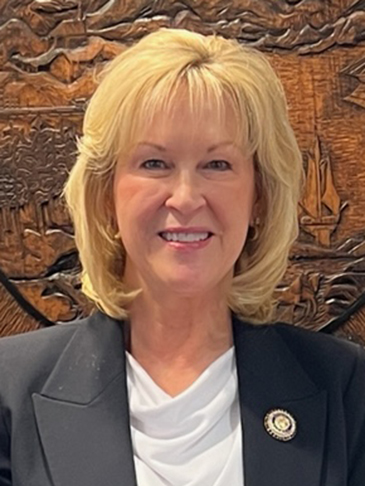
Alaska's lieutenant governor launched her gubernatorial campaign in October 2025 with a résumé tailor-made for a top-four finish: statewide office, legislative experience, and a stint running the Department of Corrections. No opponent has landed a punch. No scandal has surfaced. No debate performance has gone sideways. And yet Nancy Dahlstrom's probability of advancing through Alaska's nonpartisan primary has collapsed from 75% in December to just 17% today, according to live contracts on both Kalshi and Polymarket.
The 14-percentage-point drop over the past three days alone, from 31% to 17%, qualifies as a breakout move. No triggering news event explains it. The most recent headline attached to Dahlstrom's name dates back to her campaign launch on October 7, 2025. The silence since then has been near-total, with no major announcements, endorsements, or performances surfacing in the intervening five months. What the market is pricing is not a candidate stumbling. It is a candidate being crowded out.
Nancy Dahlstrom Was the Presumptive Frontrunner. The Market Has Changed Its Mind.
In December 2025, Dahlstrom held a 75% implied probability of finishing in the top four on Polymarket. That number placed her just behind former state Minority Leader Tom Begich, who sat at 86%. The gap between Dahlstrom and the rest of the field was wide. Forecasters treated her advancement as close to a foregone conclusion.
The erosion since then has been steady, not sudden. From 75% in December to 31% three days ago to 17% today, the trajectory is a slow bleed rather than a cliff. That pattern matters. Single-day crashes typically correlate with a discrete event: a withdrawal, an indictment, a damaging leak. Gradual declines correlate with shifting structural assessments. The market is not reacting to what Dahlstrom has done. It is recalibrating how many viable candidates are splitting the same pool of voters.
Alaska's Top-Four Primary Is a Different Kind of Race
Alaska abandoned conventional partisan primaries in 2022 in favor of a nonpartisan blanket system. All candidates regardless of party appear on a single ballot, and the top four vote-getters advance to the general election. The system rewards breadth of appeal and punishes lane congestion.
The current field, per filings tracked by the Alaska Public Offices Commission, includes at least 10 declared or intent-filing candidates: Tom Begich, Click Bishop, Dave Bronson, Adam Crum, Edna DeVries, Matt Heilala, James Parkin, Treg Taylor, Shelley Hughes, and Bernadette Wilson. Former U.S. Representative Mary Peltola has also been mentioned as a potential entrant. Dahlstrom occupies a Republican establishment lane alongside Crum (a former Revenue Commissioner under Governor Dunleavy), Taylor (a former Attorney General under Dunleavy), Hughes (a sitting state senator), and Bishop (a former state senator). Five credible candidates competing for what may amount to two or three Republican-leaning slots in a top-four system is arithmetic that works against everyone in the cluster.
The math is straightforward. If four strong conservatives each pull 12-15% of the primary vote, none of them may finish in the top four if even two candidates from other lanes consolidate support more efficiently. Dahlstrom's credentials do not insulate her from this dynamic. They make her one more well-qualified option in an oversaturated category.
What the Prediction Market Is Actually Saying About Dahlstrom's Chances
The current spread between platforms is tight. Kalshi prices Dahlstrom at 18%, while Polymarket sits at 16%. That two-point gap suggests consistent sentiment across forecaster pools rather than a single platform's quirk driving the decline.
The 17% period low, reached today, represents the worst implied probability Dahlstrom has carried in this market's history. The three-day slide from 31% to 17% is the steepest short-term drop she has experienced, and it happened during a week with no Alaska political news of consequence. That mismatch between price action and news flow is the core signal. Forecasters are not downgrading Dahlstrom because of anything she did. They are upgrading their assessment of the field's fragmentation risk.
The Case That the Market Is Overreacting
Seventeen percent may be too low. Here is why.
Dahlstrom is the sitting lieutenant governor, the only candidate in the field who currently holds statewide elected office. In low-turnout primaries, name recognition is a blunt but effective advantage. Alaska's August primaries historically draw modest participation, and ballot position plus statewide familiarity can carry a candidate further than polling suggests months in advance.
Additionally, not all 10+ declared candidates will maintain active campaigns through August 18. Consolidation is the norm in crowded races. If two or three of the Republican-lane competitors drop out or fail to raise money, Dahlstrom's share of conservative voters could reconcentrate quickly. Her probability at 75% may have been overconfident, but 17% may be overcorrecting in the opposite direction, assigning too much weight to a field size that is likely to shrink before voters cast ballots.
The resolution date is nearly five months away. A lot of the field's current size is aspirational, not durable.
What Would Move Dahlstrom's Price From Here
Three scenarios would push her odds back above 30%. First, the exit of one or more credible Republican competitors, particularly Crum or Taylor, would immediately reduce the lane congestion dragging her down. Second, a major endorsement from Governor Dunleavy, who has not publicly backed a successor, would consolidate establishment support behind her. Third, any early polling showing Dahlstrom leading the Republican cluster would force the market to recalibrate upward.
The downside scenario is equally clear. If Peltola enters and locks up the center-left lane, the remaining three advancement slots become a knife fight among conservatives. In that world, Dahlstrom at 17% could prove generous.
The market is not broken. It is doing what markets do when uncertainty compounds: spreading probability across more outcomes. Nancy Dahlstrom is not losing this race because she is a weak candidate. She is losing market confidence because Alaska's primary structure turns a crowded field into a math problem, and right now, the math does not solve in her favor.
Join our Discord for breaking news alerts, driven by real-time movements in prediction markets.
Free Trading Tools
View allCompare fees across Kalshi, Polymarket & PredictIt.
Find fair probabilities with the overround removed.
See if a trade has positive EV before you enter.
Convert American, decimal & implied probability.
Combined odds and payouts for multi-leg bets.
Your real take-home after fees and taxes.