
Dahlstrom's Odds to Win Alaska Governor Primary Fall to 24%
Prediction markets cut Dahlstrom's primary odds 10 points in 72 hours as a February poll shows her polling 5th in a field she needs only a top-four finish to survive.
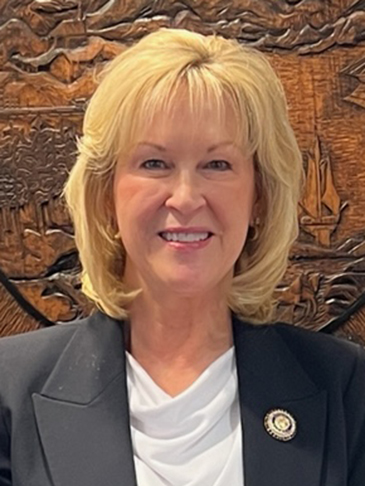
Nancy Dahlstrom's Governor Odds Fall 10 Points in 72 Hours: What Do Alaska Markets Know?
Alaska's sitting Lieutenant Governor cannot crack the top four in her own state's gubernatorial primary, according to a February 2026 poll that places Nancy Dahlstrom at just 5% support among likely voters. That number puts her behind four other candidates in a race where finishing fifth means elimination. Prediction markets have spent the last 72 hours absorbing this reality.
Dahlstrom's implied probability of advancing from Alaska's nonpartisan top-four primary has fallen from 34% to 24% across Kalshi and Polymarket over the past three days, with Kalshi pricing her at 23% and Polymarket at 26%. A 10-percentage-point drop typically follows a specific triggering event: a campaign suspension, a scandal, or a damaging endorsement loss. In Dahlstrom's case, no such catalyst has surfaced. What appears to be happening instead is a slower reassessment. Markets that had given a credentialed incumbent the benefit of the doubt are now confronting the polling math, and the polling math is brutal.
The core tension is hard to ignore. Dahlstrom holds the second-highest constitutional office in the state. She filed her letter of intent to run for governor in May 2025. She has name recognition, institutional support, and the trappings of a serious candidacy. Yet the February poll conducted by Lake Research Partners, surveying 600 likely voters with a ±4.0% margin of error, shows her running behind a businesswoman, a former Anchorage mayor, a former state senator, and a Democrat. Before diagnosing what's driving the collapse, readers need to understand why Alaska's unusual primary structure makes this situation so paradoxical.
Alaska's Top-Four Primary Should Be Nancy Dahlstrom's Safety Net, So Why Isn't It?
Alaska replaced its traditional partisan primaries with a nonpartisan blanket primary system after a 2020 ballot measure. All candidates, regardless of party, appear on a single primary ballot. The top four advance to the general election, which uses ranked-choice voting. The structural implication is that the bar for survival is low. You don't need a plurality. You don't need to win your party's lane. You just need to avoid finishing fifth or worse.
In a field of ten named candidates plus undecideds, Dahlstrom's 5% should theoretically be enough to stay competitive for the fourth slot. But the February numbers tell a different story. Tom Begich leads at 38%. Bernadette Wilson holds 16%. Dave Bronson sits at 13%. Jonathan Kreiss-Tomkins is at 9%. Click Bishop registers 8%, and Matt Claman polls at 6%. Dahlstrom's 5% puts her seventh. Even if the field narrows before August 18, she would need to leapfrog at least three candidates polling above her to claim the fourth and final advancing position.
The 23% of undecided voters represent her most plausible path. If lower-tier candidates like Adam Crum (2%), Treg Taylor (2%), and Shelley Hughes (4%) consolidate around Dahlstrom, she could theoretically absorb enough support to climb. But that argument requires explaining why undecideds and minor-candidate supporters would gravitate toward the Lt. Governor rather than toward candidates already demonstrating stronger traction.
What's Behind the Collapse? The News Driving Dahlstrom's Alaska Governor Market Freefall
There is no single breaking news event in the past 72 hours that explains this 10-point drop. No endorsement loss has been reported. No campaign shakeup has been announced. The most recent notable development in Dahlstrom's campaign timeline remains her May 2025 filing. The absence of a catalyst is itself informative.
What this price action more likely reflects is a delayed correction. Markets sometimes overprice incumbency and name recognition, especially in obscure down-ballot races where liquidity is thin and early pricing is driven by assumptions rather than data. Dahlstrom's odds at 34% three days ago implied she had roughly a one-in-three chance of advancing. That number was generous, given that the only publicly available poll placed her at 5%, behind six other candidates. The current 24% may represent traders finally incorporating that February data into their models, or it may reflect growing confidence that the Republican field will remain fragmented enough to crowd her out.
The Republican side of the ballot is particularly punishing for Dahlstrom. Wilson (16%), Bronson (13%), Bishop (8%), and Dahlstrom (5%) are all competing for overlapping voters. In a traditional Republican primary, one of these candidates would consolidate support. In Alaska's nonpartisan format, they all appear on the same ballot, splitting the conservative vote four ways and making it possible for multiple Democrats to claim advancing positions. Begich at 38% is essentially guaranteed a slot. Kreiss-Tomkins at 9% and Claman at 6% could benefit from a fractured Republican field if Democratic voters unify.
The Case for Dahlstrom: Why 24% Might Still Be Too Low to Dismiss
The strongest argument for Dahlstrom is that this poll is five months old in a race that doesn't resolve until August 18, 2026. Five months is a long time in a state with fewer than 750,000 residents, where retail politics and late-breaking endorsements can reshape a race quickly. Dahlstrom's position as Lt. Governor gives her institutional advantages that polls taken months before an election may not capture: access to donors, a statewide travel schedule, and the ability to claim executive experience.
There's also the field attrition factor. The February poll included ten named candidates. If even three or four lower-tier Republicans drop out before the primary, their combined 12-15 percentage points of support has to go somewhere. Dahlstrom, as the highest-ranking elected official among Republicans in the race, could be the natural consolidation point. A 24% implied probability accounts for this possibility without overstating it.
But the counter-argument deserves equal weight. Dahlstrom has been Lt. Governor since 2022 and still polls at 5%. That is not an awareness problem. Voters know who she is and are choosing other candidates. Wilson and Bronson have demonstrated stronger appeal among conservatives. The undecided pool, while large at 23%, is not a guaranteed reservoir for any single candidate. Late-deciding voters in crowded primaries tend to gravitate toward candidates with momentum, not toward those struggling to register above the noise floor.
At 24%, the market is saying Dahlstrom has roughly a one-in-four chance of advancing. Given her polling position, that still feels generous. But the race is five months away, the field will almost certainly shrink, and Alaska's small electorate rewards candidates who can run aggressive ground campaigns. The question is whether Dahlstrom's institutional standing can overcome a polling deficit that, as of February, placed her behind a half-dozen competitors in a race she needs only a top-four finish to survive.
Join our Discord for breaking news alerts, driven by real-time movements in prediction markets.
Free Trading Tools
View allCompare fees across Kalshi, Polymarket & PredictIt.
Find fair probabilities with the overround removed.
See if a trade has positive EV before you enter.
Convert American, decimal & implied probability.
Combined odds and payouts for multi-leg bets.
Your real take-home after fees and taxes.