
Dahlstrom's Primary Odds Drop 13 Points as Markets Absorb Her 5% Polling
Kalshi and Polymarket both now price Dahlstrom at roughly 22% to advance from Alaska's 13-candidate top-four primary, with resolution set for August 18, 2026.
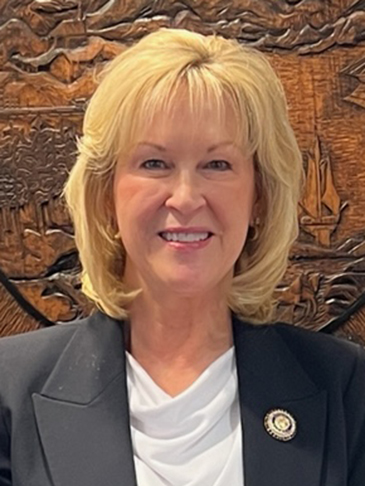
Nancy Dahlstrom's Prediction Market Odds Drop 13 Points With No Obvious Trigger
Alaska's lieutenant governor has not made a major campaign announcement in weeks. No rival has dropped out. No scandal has surfaced. No endorsement has reshuffled the field. Yet over the past three days, Nancy Dahlstrom's implied probability of advancing from Alaska's nonpartisan top-four gubernatorial primary has fallen from 36% to 22%, a 13-percentage-point decline tracked across both Kalshi and Polymarket.
The move is striking precisely because nothing visible triggered it. Kalshi prices Dahlstrom at 23%; Polymarket sits at 22%. The platforms agree, and the spread is tight enough to confirm the repricing is not a single-platform anomaly. In a 13-candidate field where only four advance, Dahlstrom's odds had been sitting well above what her polling justified for weeks. The correction appears to be traders independently reaching the same conclusion: the old price was wrong.
The primary is scheduled for August 18, 2026, giving the market nearly five more months to resolve. But five months of runway does not explain why a candidate polling at 5% was ever priced above 35%. Before asking what changed, it is worth asking whether the prior price made any sense at all.
With 5% in the Polls, Was Dahlstrom Ever a Safe Bet to Advance?
A February 2026 poll conducted by Lake Research Partners, surveying likely voters from February 5 through February 11, placed Dahlstrom at just 5% support. That same poll showed Tom Begich at 22%, Click Bishop at 6%, and Matt Claman at 6%. Dahlstrom was not merely trailing the frontrunner; she was trailing multiple lesser-known candidates.
The arithmetic of Alaska's top-four system is straightforward. Thirteen candidates are competing. Four advance. A candidate does not need to win outright, only to finish in the top four by raw vote count. On paper, that is a generous structure. In practice, 5% support in a 13-way race places Dahlstrom roughly in the middle of the pack, not near the cutoff for advancement. If anything, the February poll suggests she would need to more than double her current support just to be competitive for the fourth slot.
At 36%, the market was pricing Dahlstrom as if she had roughly a one-in-three chance of clearing that bar. That implied probability assumed either that the polling was deeply flawed, that massive consolidation of support was forthcoming, or that some structural advantage would override her low standing. The 13-point correction suggests traders have started to question all three assumptions simultaneously.
The Steelman Case: Why Some Traders Still Have Nancy Dahlstrom Advancing at 22%
Even at 22%, the market still gives Dahlstrom a higher probability of advancing than her raw polling would suggest. That residual premium deserves examination rather than dismissal.
First, she holds the office of lieutenant governor. Name recognition in a low-turnout state primary can outperform mid-cycle polling, particularly when the electorate is not yet focused on the race. Dahlstrom filed her letter of intent on May 5, 2025, making her one of the earliest declared candidates. Early organizational advantages compound over time in Alaska, where geographic sprawl makes traditional retail campaigning expensive and difficult.
Second, Alaska's polling infrastructure is thin. Lake Research Partners is a reputable firm, but any single survey of a state with roughly 500,000 eligible voters and a nonpartisan primary format carries wide margins of error. The 5% figure could understate her true support by several points, and in a fragmented field, several points matter enormously. The difference between fifth place and fourth place may come down to a few thousand votes.
Third, establishment consolidation remains possible. If one or two of the lower-polling Republican candidates exit the race before August, their supporters are more likely to flow toward the sitting lieutenant governor than toward a Democrat or an outsider. Dahlstrom's proximity to the current governor gives her a lane that is narrow but structurally real.
These arguments are plausible. They are also speculative, and traders appear to be demanding harder evidence before pricing them in.
Tracking the Collapse: Dahlstrom's Three-Day Slide on the Chart
The chart tells a clean story. Dahlstrom's contract traded near 36% at the start of the three-day window and declined steadily to the current 22%, touching a period low of 23% before stabilizing one point above that floor. The absence of a sharp single-session drop argues against a news-driven catalyst and in favor of a gradual repricing, consistent with multiple traders independently reassessing the same publicly available polling data.
This pattern is common in low-liquidity political markets. Information that has been public for weeks can sit unpriced until a critical mass of participants notices the disconnect. The Lake Research Partners poll was published in February. The market took roughly a month to absorb it. That lag is not unusual for a state-level race five months from resolution, where trading activity is light and few participants have strong views.
The remaining question is whether 22% represents fair value or an overcorrection. Dahlstrom's period low of 23% was barely tested before a minor bounce. If the sell-off were driven by panic or a single large position exiting, a sharper snap below 20% might have followed. The relatively orderly decline suggests the new consensus is forming around the low twenties, at least for now.
What 22% Actually Means for Dahlstrom's Path to August
At 22%, the market assigns Dahlstrom roughly a one-in-five chance of finishing in the top four. That price embeds meaningful uncertainty: it acknowledges her polling weakness while leaving room for the structural advantages of incumbency adjacency, late consolidation, and polling error. It is a far more defensible number than 36%.
For the price to move materially higher, Dahlstrom would need fresh polling showing her above 10%, a major rival endorsement, or a thinning of the Republican field that narrows competition for the establishment lane. For it to fall further toward single digits, a second poll confirming or worsening the 5% figure would likely suffice.
The resolution date of August 18, 2026 is still distant. Campaign dynamics in Alaska can shift rapidly once candidates begin spending on advertising and voters start paying attention to the race. But the market has now aligned itself more closely with the available evidence. The burden of proof has shifted from those betting against Dahlstrom to those still betting on her.
Join our Discord for breaking news alerts, driven by real-time movements in prediction markets.
Free Trading Tools
View allCompare fees across Kalshi, Polymarket & PredictIt.
Find fair probabilities with the overround removed.
See if a trade has positive EV before you enter.
Convert American, decimal & implied probability.
Combined odds and payouts for multi-leg bets.
Your real take-home after fees and taxes.