
Menendez Pardon Odds Collapse to 6% After Months Ignoring Trump's Denial
Markets priced Menendez as high as 38% on Polymarket despite Trump naming him in a January denial alongside Sean Combs and Sam Bankman-Fried.
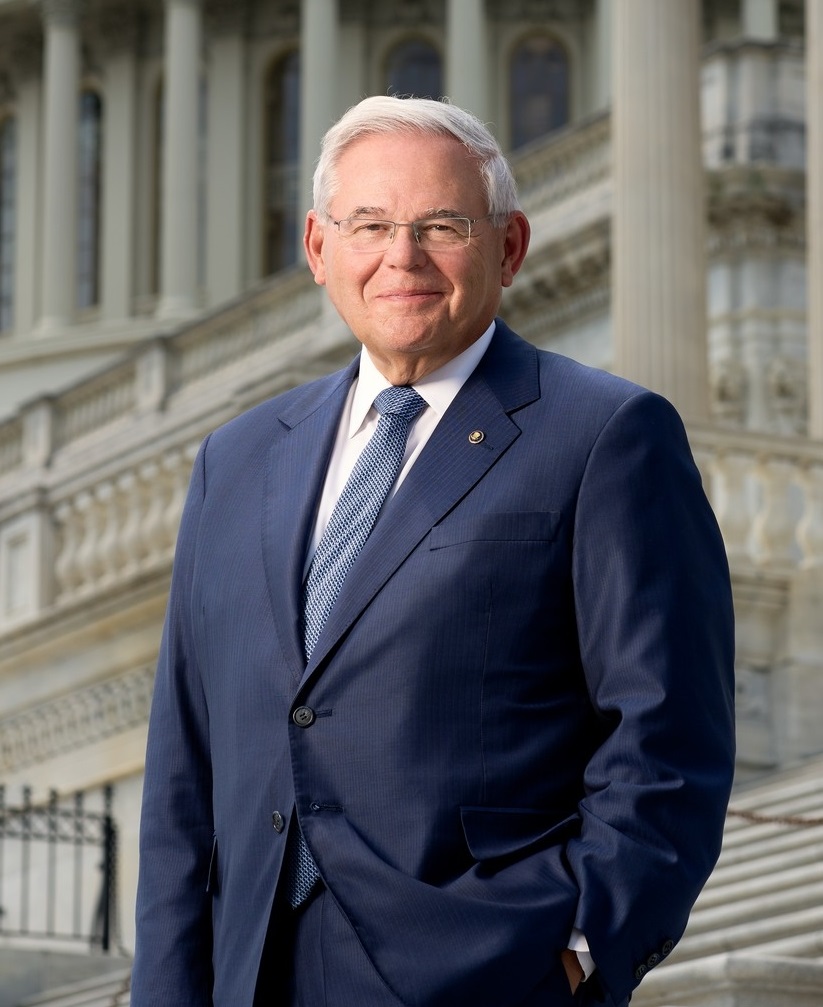
Trump Said He Wouldn't Pardon Bob Menendez. In January. Markets Just Noticed.
In January 2026, President Donald Trump told the New York Times he would not pardon former Senator Bob Menendez. He named Menendez specifically, grouping him with Sean Combs and Sam Bankman-Fried as individuals he had ruled out for clemency. The statement was on the record. It was unambiguous. It was published in one of the most widely read newspapers on Earth. And for four months, prediction markets largely ignored it.
As recently as three days ago, the implied probability of a Menendez pardon before year-end sat at 24% on blended platforms. At its peak on Polymarket, the contract traded as high as 38%. Those prices implied that roughly one in four scenarios ended with Trump reversing a named, public denial to grant clemency to a man serving an 11-year federal sentence for bribery, extortion, and conspiracy involving gold bars and cash payments on behalf of the Egyptian government.
Over the past 72 hours, the market has finally capitulated. The probability has fallen 18 percentage points to 6%, erasing months of mispricing against publicly available information. No new catalyst triggered the move. No White House statement, no court filing, no leak. The information that repriced this contract was published in January. The crash is not a reaction to news. It is a delayed acknowledgment of reality.
Bob Menendez Pardon Odds Live: Where the Market Stands Right Now
The Menendez pardon contract now trades at 6%, its period low.
Kalshi prices the outcome at 7%. Polymarket sits at 4%. That 3-point spread is narrow enough to treat both platforms as directionally aligned, a notable shift from the wide divergence that persisted for months. In April, Polymarket carried Menendez at 38% while Kalshi hovered near 10%, a gap so large it suggested the two platforms were pricing entirely different realities. That gap has now compressed to near-zero, which typically signals consensus rather than further downside.
At 6%, the market assigns Menendez roughly a 1-in-17 chance of receiving a pardon before December 31, 2026. For context, Trump has been willing to exercise clemency aggressively during this term. He pardoned Democratic Representative Henry Cuellar in December 2025, granted clemency to Rudy Giuliani and other allies who sought to overturn the 2020 election in November 2025, and pardoned Binance founder Changpeng Zhao in October 2025. The pattern shows a president willing to use his pardon power broadly. But broad does not mean universal, and Trump drew an explicit line at Menendez.
The Price History of a Market That Ignored Trump's Own Words
The three-day chart tells a straightforward story of capitulation, but the months preceding it tell a far stranger one.
After Trump's January 2026 denial, the contract did initially decline toward its period low of roughly 11%. That response was rational if incomplete, given the severity of the statement. But then the price reversed. By early April it had climbed back to 24% on the blended average and 38% on Polymarket, suggesting a growing cohort of traders was actively betting that Trump would contradict his own named denial. No public information supported that bet. There was no reporting of a White House reconsideration, no lobbying campaign, and no intermediary publicly advocating for Menendez's release.
The April surge looks, in hindsight, like speculative momentum detached from fundamentals. Menendez himself publicly stated after his January 2025 sentencing that "Trump is right" about political prosecutions, which some traders may have interpreted as signaling a transactional relationship. But signaling is not the same as a policy reversal, and the market apparently confused the two for months before this week's correction.
Why Prediction Markets Slept on Trump's Menendez Denial for Months
The most uncomfortable question this episode raises is structural: why did it take prediction markets four months to price in a clear, named, on-the-record denial?
Three factors explain most of the lag. First, Trump's pardon record during this term has been erratic enough to discount any single statement. The Cuellar pardon surprised observers who assumed bipartisan clemency was off the table. The Zhao pardon seemed to come from nowhere. When a president's clemency behavior is hard to model, markets rationally assign nonzero probabilities to outcomes that verbal statements appear to rule out. The problem is degree: a 5% to 8% "he might change his mind" premium is defensible; 24% to 38% is not.
Second, thin liquidity in long-tail pardon contracts can amplify small positions into outsized price moves. A few thousand dollars of buying pressure on Polymarket can push a low-volume contract from 15% to 38% without reflecting broad market conviction. The 3-point Kalshi-Polymarket spread that exists today suggests this distortion has largely washed out.
Third, prediction markets suffer from attention gaps. Contracts that resolve months in the future attract less continuous scrutiny than those resolving in days. Mispricing can persist simply because not enough informed traders are watching.
The Case for Menendez at 6%: What Would Need to Change
The strongest argument against the current price is not that Menendez deserves a pardon or that Trump secretly wants to grant one. It is that Trump has reversed himself before. He pardoned individuals he had previously criticized. He granted clemency to political figures with no obvious loyalty connection to him. The Cuellar pardon, in particular, demonstrated that Democratic affiliation was not a disqualifier.
For Menendez to resolve "yes," Trump would need to reverse a specific, named denial in under eight months. That denial was not an offhand remark. It was a statement to the New York Times in response to a direct question. The reversal would need to overcome the additional obstacle that Menendez's crimes, involving foreign government bribery while serving in the U.S. Senate, are qualitatively different from the process crimes and political loyalty cases that have characterized most of Trump's clemency actions.
A 6% probability prices in the small but nonzero chance that something changes between now and December 31: a political deal, a health crisis, or an unexpected shift in White House priorities. That residual risk premium appears roughly correct. The months spent at 24% to 38% do not.
What 6% Means for the Pardon Market's Resolution
This contract resolves on December 31, 2026. At current prices, the market is telling you that Menendez is functionally out of the pardon conversation, with the remaining 6% reflecting the irreducible uncertainty that attaches to any prediction about a president whose clemency decisions have defied pattern.
The broader lesson is about information efficiency. Prediction markets are often described as the fastest mechanism for aggregating public knowledge into prices. The Menendez contract is a counterexample. Public, named, unambiguous information sat on the table for four months while the market priced the opposite. The 18-point correction that arrived this week was not a market responding to a catalyst. It was a market admitting it had been wrong, slowly, and then all at once.
Join our Discord for breaking news alerts, driven by real-time movements in prediction markets.
Free Trading Tools
View allCompare fees across Kalshi, Polymarket & PredictIt.
Find fair probabilities with the overround removed.
See if a trade has positive EV before you enter.
Convert American, decimal & implied probability.
Combined odds and payouts for multi-leg bets.
Your real take-home after fees and taxes.