
Menendez Pardon Odds Hit 23% Despite White House Denial, Up 8pp in 3 Days
Kalshi prices the contract at 10% while Polymarket sits at 36%, a 26-point spread suggesting at least one platform is mispriced on the contract.
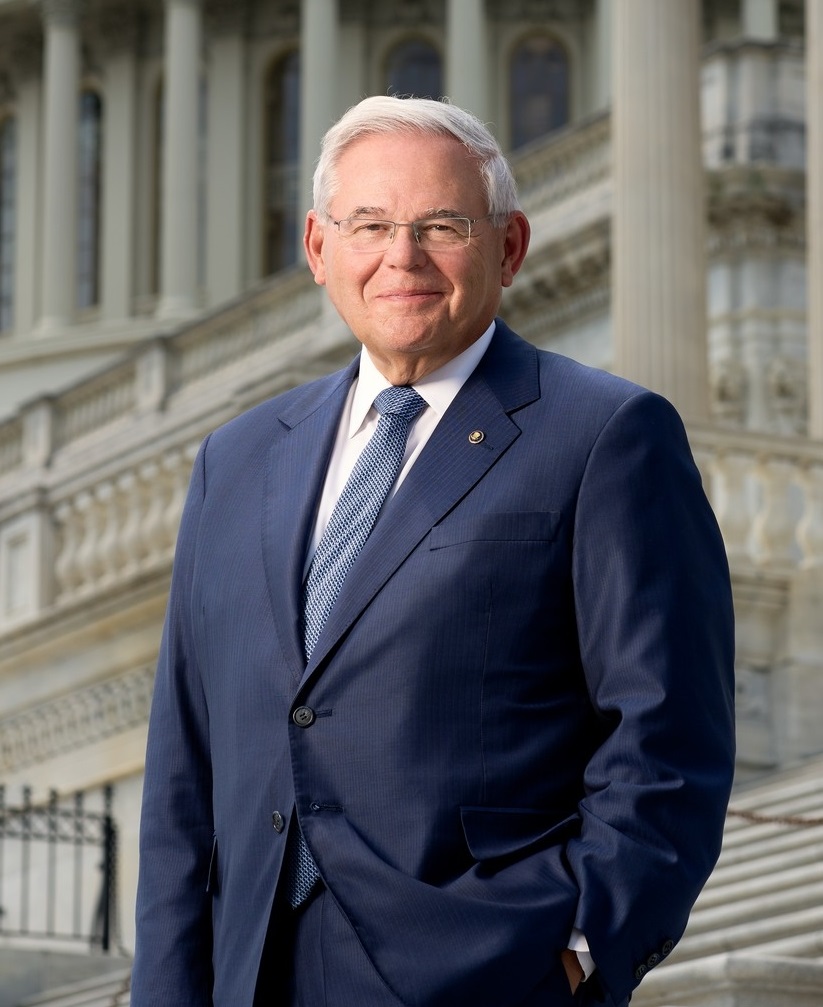
Trump Said No to a Menendez Pardon. So Why Are Prediction Markets Surging?
The New Jersey Globe reported this month that the Trump White House is not considering a pardon for former Senator Bob Menendez, who is currently serving an 11-year federal sentence at FCI Schuylkill in Pennsylvania. The report, citing NYT sourcing, was as direct a denial as markets typically get. Prediction markets should have repriced downward. They did the opposite.
Over the three days following that report, the Menendez pardon contract on the "Who will Trump pardon before 2027?" market jumped from 15% to 23%, an 8 percentage point move representing a 53% relative increase. The contract had bottomed at 12% earlier in its lifecycle, meaning it has nearly doubled from its period low. This is not a market drifting on thin volume. This is a market actively rejecting an official denial.
That pattern is rare. In most prediction markets, an on-the-record White House statement that something is not under consideration pushes implied probability toward single digits. Here, the opposite occurred: the denial functioned as a catalyst for buyers, not sellers. Either the market knows something the reporting doesn't capture, or a cohort of traders is making a deeply contrarian bet that this denial will age as poorly as past ones.
What the Bob Menendez Pardon Market Is Actually Telling You Right Now
The blended probability across platforms sits at 23%, but the per-platform picture tells a more complicated story. On Kalshi, the Menendez contract trades at 10%. On Polymarket, it trades at 36%. That 26 percentage point spread between platforms is enormous and signals that price discovery is fragmented, not converging. When two markets disagree this sharply, it usually means at least one of them is mispriced.
The 3-day surge is visible in the chart above, and its timing matters. The move came after the denial was already public. Traders had the information, processed it, and bought anyway. In financial terms, this is the market expressing a view that the base rate for Trump reversing a public stance on pardons is higher than the base rate for any other president. The total market volume across all pardon candidates sits at roughly $204,500 on Polymarket, confirming that this is an actively traded event, not a ghost market where a single order can swing prices.
For context, Menendez's 23% blended probability puts him in the upper tier of pardon candidates, well above figures like Sam Bankman-Fried (7%), Ghislaine Maxwell (7%), and Edward Snowden (14%). He trails only candidates like Roger Stone (38%), Daniel Penny (36%), and Matt Gaetz (50%), all of whom have far more direct political ties to Trump's inner circle.
The Case for a Menendez Pardon: Why Markets Think They Know Something the White House Doesn't
The bull case rests on three pillars, each grounded in Trump's documented behavior rather than speculation.
First, Trump has issued pardons or commutations for 52 people on white-collar or politically adjacent charges since the start of his second term. That pace is historically aggressive. The precedent says the pardon pen stays busy.
Second, Menendez has explicitly aligned himself with Trump's narrative. After receiving his 11-year sentence in January 2025, Menendez told reporters, "I hope President Trump cleans up the cesspool and restores the integrity to the system," according to Fortune. He has framed his own prosecution as evidence of a weaponized DOJ, echoing Trump's central political grievance. A Democratic senator validating Trump's narrative about prosecutorial overreach has unique political utility that a Republican ally's pardon does not.
Third, and most critically, Trump reportedly told advisers he would pardon "everyone who has come within 200 feet of the Oval Office," according to The Guardian. That comment, made in a casual context on April 11, was not official policy. But prediction markets don't price official policy. They price probability-weighted outcomes, and a president who talks openly about mass pardons eight months before this contract resolves on December 31, 2026, creates a fat tail that the market is clearly pricing in.
The Case Against: Why 23% Might Be Generous
The strongest counter-argument is straightforward: Menendez was convicted of taking gold bars and cash from foreign governments. This is not a case where prosecutorial overreach is easy to argue. Sixteen counts, including bribery, extortion, and conspiracy, produced a conviction that even Trump-sympathetic commentators have not seriously challenged on the merits.
Trump's pardon pattern favors people who were either personally loyal to him (Roger Stone, Steve Bannon) or whose cases became culture-war flashpoints (Daniel Penny, the January 6 defendants). Menendez fits neither category cleanly. He is a Democrat who served in the Senate for decades, and his corruption case involved foreign actors, including the governments of Egypt and Qatar. Pardoning him would invite bipartisan criticism without delivering an obvious political reward.
The Kalshi price of 10% arguably reflects this reality more accurately than Polymarket's 36%. The platform spread suggests that the higher Polymarket figure may be driven by a smaller number of aggressive buyers rather than broad consensus. Without specific order book data, it is impossible to confirm that interpretation, but the divergence itself is a warning sign for anyone reading the blended 23% as settled conviction.
Where This Resolves: The Clock and the Calculus
This contract resolves on December 31, 2026. That gives Trump eight more months to act. If history is any guide, presidential pardons tend to cluster at two moments: the holiday season and the final weeks of a term. Trump's second term does not end until January 2029, so the end-of-term pardon dump is irrelevant to this contract. The question is whether Trump issues a pardon before New Year's Eve of this year.
The market at 23% is saying there is roughly a one-in-four chance Trump pardons a senator convicted on 16 federal counts, against an explicit White House denial, within the next eight months. That is either a sophisticated read on a president who has made denial-reversal a governing style, or it is a mispriced contract inflated by thin liquidity on one platform. The 26 percentage point spread between Kalshi and Polymarket suggests the answer is closer to the latter. But in the Trump pardon market, the gap between "not considering" and "just signed the paperwork" has collapsed before.
Join our Discord for breaking news alerts, driven by real-time movements in prediction markets.
Free Trading Tools
View allCompare fees across Kalshi, Polymarket & PredictIt.
Find fair probabilities with the overround removed.
See if a trade has positive EV before you enter.
Convert American, decimal & implied probability.
Combined odds and payouts for multi-leg bets.
Your real take-home after fees and taxes.