
Mojtaba Khamenei's odds to be Iran's Supreme Leader surge to 81.25%
Mojtaba Khamenei's predictions as Iran's next Supreme Leader soar 73.03 points amid political turmoil following his father's assassination.
The Lede
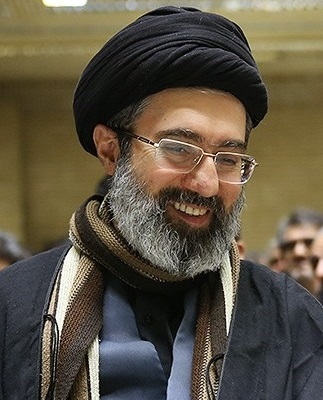
For decades, Mojtaba Khamenei operated in the shadows. He held no government office, sought no public profile, and appeared at carefully chosen moments — a demonstration here, a funeral there — always just visible enough to remind Iran's power brokers that he existed, and never visible enough to invite scrutiny. That strategy, if it was a strategy, has now delivered him to the threshold of the most powerful position in the Islamic Republic.
Iran International reported Tuesday that the Assembly of Experts has elected Mojtaba Khamenei as Iran's next Supreme Leader, the second in the republic's history. The selection was not the orderly constitutional succession that Iran's clerical establishment had long planned for. It was, by all accounts, a rushed and contested appointment forced through by the Islamic Revolutionary Guard Corps in the chaotic hours following the assassination of his father, Ayatollah Ali Khamenei, killed on February 28, 2026 in joint U.S.-Israeli airstrikes that tore through Tehran's leadership structure in a single night.
The prediction markets have processed all of this with unusual speed. Mojtaba Khamenei now sits at 81.25% to become Iran's next Supreme Leader — up from roughly 8% just days ago, a 73-point move that represents one of the more dramatic swings this market has seen. That number is less a forecast than a verdict: the markets believe this is effectively settled.
The Night Everything Changed
The strikes on February 28 were described by American officials as targeting Iran's nuclear infrastructure, but their effect on the country's leadership class was sweeping and immediate. Killed alongside the Supreme Leader were Ali Shamkhani, his top security adviser, and Mohammad Pakpour, the IRGC's commander-in-chief. The three clerics Khamenei had privately designated as potential successors — Gholam-Hossein Mohseni-Eje'i, Asghar Hijazi, and Hassan Khomeini — were either killed in the strikes or rendered unreachable in the chaos that followed. Trump, in a characteristically blunt assessment on ABC News, acknowledged the collateral effect on the succession: "The attack was so successful it knocked out most of the candidates. It's not going to be anybody that we were thinking of because they are all dead. Second or third place is dead."
What remained was a leadership vacuum at the precise moment Iran was under active bombardment, its military chain of command disrupted, and parts of its security apparatus in disarray. Iran International reported that some military commanders and lower-ranking personnel had stopped reporting to their bases entirely. Into that vacuum, the IRGC moved decisively.
The Man the Markets Are Now Betting On
Mojtaba Khamenei is 56 years old and, until this week, unknown to most of the world outside the Tehran political class. He is, technically, a mid-level Shiite cleric — not a Grand Ayatollah, not a jurist of the rank that Iran's constitution envisions for the Supreme Leader position. He was sanctioned by the United States in 2019. Bloomberg reported in January that he oversees a significant investment empire, with sources describing access to Swiss bank accounts and British luxury property valued at more than $100 million.
What Mojtaba has always had — what has made him consequential despite his deliberate obscurity — is his relationship with the IRGC and the Basij paramilitary force. He is understood to have cultivated those ties for years, quietly, as a kind of insurance policy. With his father's preferred successors dead or sidelined and the Guards demanding rapid consolidation, that relationship became the deciding factor.
The selection process that resulted in his reported appointment was, by multiple accounts, deeply irregular. Iran's constitution assigns the succession to the Assembly of Experts, an 88-member clerical body elected by the public. But with U.S.-Israeli strikes ongoing, convening that body in full was not feasible. The IRGC pushed for a decision outside the legally prescribed procedures. The result, if confirmed, would be a Supreme Leader whose legitimacy rests substantially on military backing rather than clerical consensus — a dynamic that could shape Iranian politics for years.
The Contradiction at the Heart of His Candidacy
There is a profound irony baked into Mojtaba's reported ascension that Iran's clerical establishment has spent years trying to avoid confronting. The Islamic Republic was founded in 1979 explicitly as a rebuke to hereditary rule — its founding mythology is inseparable from the overthrow of the Shah and the rejection of a system where power passed by bloodline. Father-to-son succession in the supreme leadership does not just complicate that narrative; it inverts it.
Khamenei himself understood this. According to sources cited by Reuters in 2024, the elder Khamenei had indicated opposition to his son's candidacy and explicitly did not want the Republic to be seen returning to the dynastic model the revolution had promised to bury. The Middle East Institute had warned that such an appointment would generate significant conflict within Iran's political and religious leadership. President Pezeshkian said last November that harm to Khamenei could cause internal factions to turn on each other.
None of that concern has disappeared. It has simply been deferred by the urgency of the moment. Whether it resurfaces — and how — may be the central question of Iranian politics for the remainder of this decade.
What the Remaining Uncertainty Means
The roughly 19% of the market not assigned to Mojtaba is not noise. It reflects real contingencies that remain live. Clerical opposition to an IRGC-imposed succession could still materialize if and when the immediate military pressure eases. Rival factions — including those aligned with Ali Larijani, who had positioned himself as acting security chief, or the reformist currents around Hassan Rouhani — have not been eliminated, only outmaneuvered for now. And the strikes, as of this writing, have not stopped.
Official confirmation through Iranian state media would likely push the market into the 90s. The absence of that confirmation, or any sign of internal fracturing over the appointment, could just as easily push it back down. The market resolves December 31, 2026 — and between now and then, Iran will be navigating the most consequential political transition in its modern history under conditions no one in Tehran planned for.
Join our Discord for breaking news alerts, driven by real-time movements in prediction markets.
Free Trading Tools
View allCompare fees across Kalshi, Polymarket & PredictIt.
Find fair probabilities with the overround removed.
See if a trade has positive EV before you enter.
Convert American, decimal & implied probability.
Combined odds and payouts for multi-leg bets.
Your real take-home after fees and taxes.