

Sahasrabudhe Hits 40% to Win 2026 Fields Medal, Up 16pp in 3 Days
Polymarket prices the Cambridge combinatorialist at 53%, well above Kalshi's 27%, as his Adams Prize and ICM 2026 invitation reprice his chances.
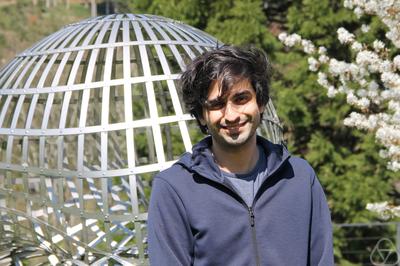
Julian Sahasrabudhe's 40% Fields Medal Odds Are Turning Heads
Three days ago, Julian Sahasrabudhe was trading at 24% in the "Who will win the Fields Medal in 2026?" prediction market. Today he sits at 40%. That 16 percentage point surge is the largest move among any candidate in this market cycle, and it positions a Cambridge-based combinatorialist as the clearest challenger to Hong Wang, whose implied probability holds steady at 84%.
No single news event in the past 72 hours explains the move cleanly. There has been no leaked committee decision, no new preprint, no public endorsement from a prominent mathematician. The most plausible catalyst is the market catching up to two credentials that landed in recent months: Sahasrabudhe was awarded the Adams Prize 2025-26 for discrete mathematics, and he was named an invited speaker at ICM 2026. Both of these credentials historically correlate with Fields Medal selection. The market appears to be repricing that correlation in real time.
The Fields Medal awards up to four recipients per cycle. That structural fact is critical: Wang at 84% and Sahasrabudhe at 40% are not contradictory. They can both win. The market is not replacing one favorite with another. It is expanding its consensus about who belongs in the winner's circle when the IMU committee announces its decisions at the International Congress of Mathematicians on July 30, 2026.
Hong Wang's Kakeya Breakthrough Looked Like a Lock
To understand why Sahasrabudhe's rise matters, you need to understand the mountain he is climbing. Hong Wang, an associate professor at NYU's Courant Institute, resolved the Kakeya conjecture in three-dimensional space alongside Joshua Zahl in 2025. The Kakeya problem had been open for decades and sits at the intersection of harmonic analysis and geometric measure theory. Leading mathematicians described the resolution as generational.
Fields Medal history rewards exactly this profile: a young mathematician who produces a single, field-defining result. Wang fits the template almost perfectly. Her 84% implied probability reflects that. In prediction market terms, 84% is near-certainty territory, the kind of price you see on an incumbent with no viable challenger.
Yet 84% is not 100%. The remaining 16 percentage point gap prices in the structural uncertainty that the Fields Medal committee has historically delivered: surprise selections, politically balanced geographic representation, and occasional recognition of breadth over depth. That gap is where Sahasrabudhe's candidacy gains oxygen.
What the Numbers Actually Say: Inside the Fields Medal 2026 Prediction Market
The market trades on both Kalshi and Polymarket, with a notable divergence between platforms. Kalshi prices Sahasrabudhe at 27%, while Polymarket has him at 53%. That spread is wide enough to suggest different participant pools with different information sets, or different risk appetites toward a combinatorics-flavored dark horse. The blended figure of 40% sits between the two, but the Polymarket price is doing the heavy lifting in the surge narrative.
The multi-winner structure of the Fields Medal makes this market behave differently from a standard binary prediction. Probabilities across candidates can sum to well above 100% because winning is not mutually exclusive. Wang at 84% and Sahasrabudhe at 40% together imply that bettors see a roughly one-in-three chance both are named medalists in July. That is not an unreasonable scenario given the committee can award up to four medals.
Other candidates remain in the mix. Jacob Tsimerman, Jack Thorne, Yu Deng, and John Pardon all carry non-trivial implied probabilities, though none has matched Sahasrabudhe's recent trajectory. The market is consolidating around a two-tier structure: Wang as the near-lock, Sahasrabudhe as the strongest second pick, and a longer tail of contenders competing for the remaining one or two slots.
The Case Against Sahasrabudhe
The strongest argument against Sahasrabudhe winning the Fields Medal is straightforward: the Fields Medal historically rewards single towering results, and Sahasrabudhe's portfolio, while extraordinary in breadth, does not yet have the singular canonical theorem that Wang's Kakeya resolution provides.
His work on diagonal Ramsey numbers, specifically proving exponential improvements to upper bounds first established by Erdős and Szekeres in 1935, is a major advance. His Whitehead Prize from the London Mathematical Society recognized contributions spanning Ramsey theory, complex analysis, and random matrix theory. But breadth and versatility are double-edged qualities in Fields Medal deliberations. The committee may view his profile as "not yet peaked" rather than "already proven," opting to wait for a future cycle when a single definitive result crystallizes.
There is also a category problem. Combinatorics has been historically underrepresented among Fields Medal winners compared to algebraic geometry, number theory, and analysis. Timothy Gowers won in 1998 partly for applying combinatorial methods to Banach space theory. But the committee's revealed preferences suggest a structural bias that Sahasrabudhe would need to overcome.
What Happens Next
The resolution date is July 30, 2026. Between now and then, the market will be driven by two forces: any leaks or informed speculation from mathematicians close to the IMU selection committee, and the continued reassessment of candidate portfolios as ICM 2026 approaches.
Sahasrabudhe's Adams Prize and ICM invitation are the kind of pre-medal signals that historically precede selection. They are not guarantees, but they are the institutional stamps that tell the market "this person is being seriously considered." The 16 percentage point move in three days suggests that a critical mass of market participants is now treating those signals as dispositive rather than merely suggestive.
The core thesis is this: the market is not pricing a Sahasrabudhe upset over Wang. It is pricing a Sahasrabudhe inclusion alongside Wang. At 40%, the market believes there is roughly a two-in-five chance that a Cambridge combinatorialist joins the most celebrated harmonic analyst of her generation on the medal podium in Philadelphia this July. Given his credentials, that price looks defensible. Whether it is too high or too low depends on how much weight you give to the Fields Medal committee's historical pattern of favoring singular results over dazzling versatility.
Join our Discord for breaking news alerts, driven by real-time movements in prediction markets.
Free Trading Tools
View allCompare fees across Kalshi, Polymarket & PredictIt.
Find fair probabilities with the overround removed.
See if a trade has positive EV before you enter.
Convert American, decimal & implied probability.
Combined odds and payouts for multi-leg bets.
Your real take-home after fees and taxes.