
Will Markey Win the MA Senate Primary? Markets Say 56%
Markey took 73% of convention delegates but polling shows a five-point race, with 29% of voters still undecided heading into September.
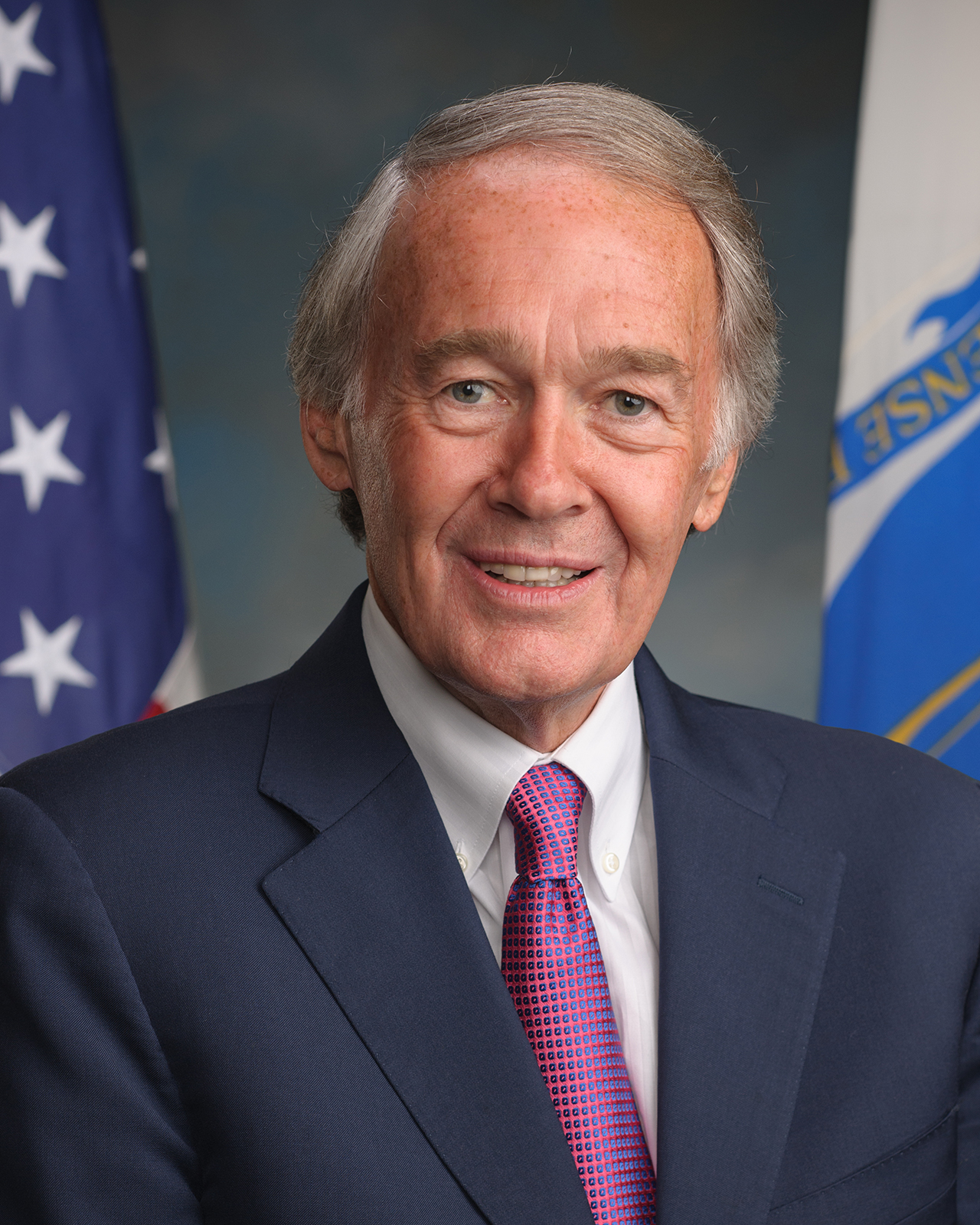
Ed Markey Won 73% of Convention Delegates. So Why Are His Senate Odds Collapsing?
Ed Markey walked out of the Massachusetts Democratic Party convention in Worcester on May 30 with a commanding victory. Nearly 73% of delegates backed the incumbent senator, a margin that would signal dominance in almost any political context. His challenger, Rep. Seth Moulton, collected roughly 27%, enough to clear the 15% threshold required for ballot access but nowhere close to threatening Markey's institutional grip.
Then prediction markets moved hard against Markey. His implied probability of winning the Massachusetts Democratic Senate nomination dropped from 80% to 56% over the same three-day window, a 23-percentage-point collapse. The market resolves September 1, the date of the primary election.
The divergence is stark enough to demand explanation. A candidate who just secured a landslide endorsement from his own party's organized base is now trading at barely better than a coin flip to win the nomination. The market is telling you which variable it thinks matters more.
Why Ed Markey's Convention Landslide May Be a Lagging Indicator
Convention delegate counts in Massachusetts are products of a specific pipeline: town committees, ward caucuses, and organized labor networks that reward institutional loyalty. Markey, who has held elected office for more than 50 years between the House and Senate, sits at the center of that infrastructure. His 73% reflects the depth of his organizational roots, not necessarily the preferences of the broader primary electorate.
The distinction matters because Massachusetts has a history of competitive Senate primaries where convention endorsements failed to predict outcomes. The convention process over-samples party insiders and activists while under-sampling the casual primary voter who decides competitive races. Markey's support base skews older and more institutionally connected. The Emerson College poll from May 3–4 showed his lead at just five points, 37% to 32%, with 29% undecided. That's a fundamentally different picture than 73-27.
A Suffolk University/Boston Globe poll from April had Markey up 47-30, a more comfortable margin. But the trendline between April and May moved in one direction: toward Moulton. Markets appear to be extrapolating that trajectory rather than anchoring to the convention result. The 29% undecided bloc in the Emerson poll is the most important number in this race. It represents a reservoir of voters who haven't committed to Markey despite his decades-long incumbency, and that indecision is itself a data point against him.
Seth Moulton's Ballot Access Is the Variable Markey's Delegates Can't Stop
Markey secured nearly 73% of delegate support at the May 30 convention yet saw his nomination probability drop from 80% to 56% in the same three-day window. Markets are pricing Moulton's ballot qualification as the more consequential outcome.
By clearing the 15% convention threshold, Moulton guaranteed himself a spot on the September 1 primary ballot. That transforms this race from a hypothetical challenge into a guaranteed head-to-head contest. Before the convention, there remained a scenario where Moulton failed to qualify and Markey cruised to renomination. That scenario is now dead. The market repriced accordingly.
Moulton, 47, is running explicitly on generational change against a 79-year-old incumbent. He's a Marine veteran and former presidential candidate with a moderate profile that gives him a distinct lane in a state where Democratic primary electorates are not monolithically progressive. Axios noted that Markey "will not leave the stage," framing the contest as an endurance test for an incumbent who has survived challenges before. Surviving and dominating are different outcomes, and the market is now pricing in a real fight.
The age contrast is potent. Markey would be 81 at the start of a new term. Moulton's "new generation" argument aligns with a Democratic electorate that has shown appetite for younger leadership, from Gavin Newsom's rise to the pressure on aging congressional leaders. With Ayanna Pressley opting out of the race in December 2025, Moulton is the sole vehicle for voters who want change but don't want to leave the Democratic Party.
The Strongest Case for Ed Markey Still Holding On
The counter-argument deserves genuine weight. Markey has won competitive primaries before, most notably against Joe Kennedy III in 2020 when he was also cast as the aging incumbent. He built a coalition of younger progressives around the Green New Deal that cycle and proved capable of reinventing his appeal. His 73% convention showing confirms that coalition hasn't evaporated among party activists.
Polling, while tightening, still shows Markey ahead in every public survey. The Suffolk/Globe poll's 17-point margin is only two months old. Incumbency advantages in Massachusetts Senate races are formidable: name recognition, fundraising infrastructure, and the ability to claim credit for federal spending. Markey's progressive credentials, including his authorship of the Green New Deal resolution, give him a policy brand that Moulton's moderate positioning cannot easily replicate in a Democratic primary where the median voter leans left.
It's also possible the market is overreacting to the ballot access confirmation. The 15% threshold was widely expected to be met; Moulton had been campaigning for months and had organized enough delegate support to make the threshold a near-certainty. If the market moved 23 percentage points on an event that was already probable, some of that move may represent overshoot rather than new information.
Tracking the 23-Point Drop in Ed Markey's Massachusetts Senate Odds
The trajectory from 80% to 56% over three days is a breakout move by any standard. Cross-platform pricing shows notable dispersion: Kalshi holds Markey at 76%, while Polymarket prices him at 18% and PredictIt at 75%. The wide spread across platforms means no single price should be taken as definitive. Kalshi and PredictIt remain closer to the pre-collapse range, while Polymarket's 18% reading suggests either a different trader base, different market structure, or a lag in price discovery on one side.
The composite 56% figure reflects the blended probability across platforms. At that level, the market assigns Markey a slightly better than even chance of winning. For a sitting senator who just won 73% of his party's convention delegates, that pricing implies deep skepticism about the translation of institutional support into primary votes.
Three months remain before the September 1 resolution date. The next round of polling will be critical. If the Emerson trendline continues and Moulton closes to within the margin of error, Markey's price could fall further. If a post-convention poll shows Markey rebuilding his lead to double digits, the current 56% will look like a buying opportunity. The 29% undecided voters in the most recent Emerson survey are the swing factor. Whoever captures the majority of that bloc wins the primary, and the market is telling you it no longer believes Markey has that locked up.
Join our Discord for breaking news alerts, driven by real-time movements in prediction markets.
Free Trading Tools
View allCompare fees across Kalshi, Polymarket & PredictIt.
Find fair probabilities with the overround removed.
See if a trade has positive EV before you enter.
Convert American, decimal & implied probability.
Combined odds and payouts for multi-leg bets.
Your real take-home after fees and taxes.