
Will Ozuna Perform at the 2026 World Cup Final? Now Just 6%
Madonna, Shakira, and BTS confirmed as headliners May 14. Ozuna dropped 45 points to 6%; Kalshi and Polymarket now within 3 points of each other.
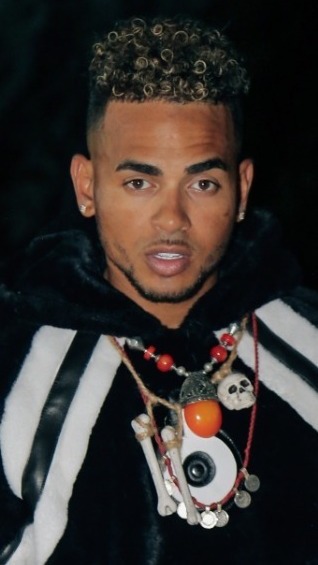
FIFA Confirms World Cup Halftime Headliners, and Ozuna Isn't One of Them
FIFA announced on May 14, 2026, that Madonna, Shakira, and BTS will co-headline the first-ever World Cup final halftime show at MetLife Stadium on July 19, according to FIFA's official statement. The performance, curated by Coldplay's Chris Martin and produced by Global Citizen, will support a $100 million education fund. The announcement named no additional performers. Characters from Sesame Street and The Muppets were cited as supplementary entertainment. Ozuna was absent from every line of the release.
That absence obliterated the reggaeton star's prediction market contract. Ozuna's implied probability on "Who will perform at the FIFA World Cup final halftime show?" collapsed from 51% to 6% across Kalshi and Polymarket over a three-day window, a 45-percentage-point drawdown that ranks among the sharpest single-candidate corrections in entertainment futures this year. Kalshi currently prices him at 8%; Polymarket at 5%. The spread between platforms confirms this is consensus, not a platform-specific anomaly.
FIFA's confirmation functions as a near-terminal event for speculative candidates. Unlike political primaries or sports seasons, where rosters shift and alliances form, a halftime show booking is a contractual commitment announced through official channels. AP News reported the lineup as a "Super Bowl-style" production, underscoring its scale and finality. Once Madonna, Shakira, and BTS were locked in, the structural ceiling for any unlisted artist dropped to near zero.
Ozuna's 51% Peak Was a Red Flag, Not a Signal
Before FIFA spoke, Ozuna's contract sat at a majority-implied probability. That 51% figure meant traders were treating his appearance as more likely than not. In hindsight, this was a textbook case of unanchored speculation: no credible booking report, no official FIFA shortlist leak, and no management confirmation ever surfaced to justify the price.
The mechanics of the collapse tell the story. Ozuna's contract didn't grind down over weeks as competing evidence accumulated. It fell off a cliff the moment verifiable information entered the market. That velocity, 45 percentage points in roughly 72 hours, is the signature of a price that had no fundamental support. When a contract built on rumor meets a fact, the correction is instantaneous and brutal.
The 6% residual is itself informative. It represents the market's assessment that some nonzero chance remains: perhaps a surprise guest slot, a last-minute addition, or some contractual ambiguity in how the market resolves. But FIFA's language was definitive. The confirmed lineup lists three headliners and no "and friends" clause. The remaining 6% is friction, not conviction.
Why Traders Bet Big on Ozuna for the FIFA World Cup Stage
To understand the 51% peak, you have to take the bull case seriously. Ozuna is one of Latin music's highest-grossing touring acts, with deep commercial penetration across the Americas. The 2026 World Cup is being co-hosted by the United States, Mexico, and Canada, a footprint where reggaeton and Latin urban music dominate streaming and live event revenue. FIFA's stated goal of global cultural representation made a Latin urban artist a logical inclusion.
Social media amplified the thesis. In the weeks before the announcement, speculation on X and TikTok linked Ozuna to a possible World Cup appearance, driven partly by his history of performing at large-format sporting events and partly by the organic logic that FIFA would want to mirror the Super Bowl's approach of booking the biggest names in pop and Latin music simultaneously. The reasoning wasn't irrational. It was simply unverified.
The problem is that prediction markets rewarded the narrative before the evidence. A 51% contract on a candidate with no sourced booking confirmation, no FIFA shortlist inclusion, and no management statement was always a price built on plausibility rather than probability. Plausible is not the same as likely, and the market learned that distinction at a cost of 45 percentage points.
Ozuna's Price Trajectory: From Speculative Peak to Post-Announcement Floor
The chart above captures the full anatomy of this mispricing event. The climb to 51% was gradual, fueled by social speculation and the absence of contradicting information. The plateau near 50% reflected a brief equilibrium where bulls and bears lacked definitive data. Then the cliff: FIFA's May 14 announcement introduced hard information, and the contract repriced within hours.
With resolution set for July 19, 2026, Ozuna's contract has 39 days to either expire worthless or find some extraordinary catalyst. The strongest remaining bull case requires FIFA to announce additional performers, a scenario the official communications have not even hinted at. Over $30 million has already been raised through the Global Citizen partnership, and the production logistics for a three-headliner show at MetLife Stadium are locked months in advance.
For Ozuna's contract to recover meaningfully, traders would need to see a credible report of a guest performance slot or a second wave of announcements from FIFA. Neither has materialized. At 6%, the market is saying: "We can't prove it's impossible, but we can prove it's overwhelmingly unlikely." That's the right read. The 51% was noise. The 6% is residual uncertainty in a market waiting for final confirmation on July 19. In entertainment futures, official announcements are the only anchors that matter.
Join our Discord for breaking news alerts, driven by real-time movements in prediction markets.
Free Trading Tools
View allCompare fees across Kalshi, Polymarket & PredictIt.
Find fair probabilities with the overround removed.
See if a trade has positive EV before you enter.
Convert American, decimal & implied probability.
Combined odds and payouts for multi-leg bets.
Your real take-home after fees and taxes.