
Will Trump Pardon Menendez? Markets Hit 24% Despite White House No
Odds surged 11 points in 3 days with no catalyst. Kalshi prices him at 10%; Polymarket at 38%, a 28-point gap driving the composite higher.
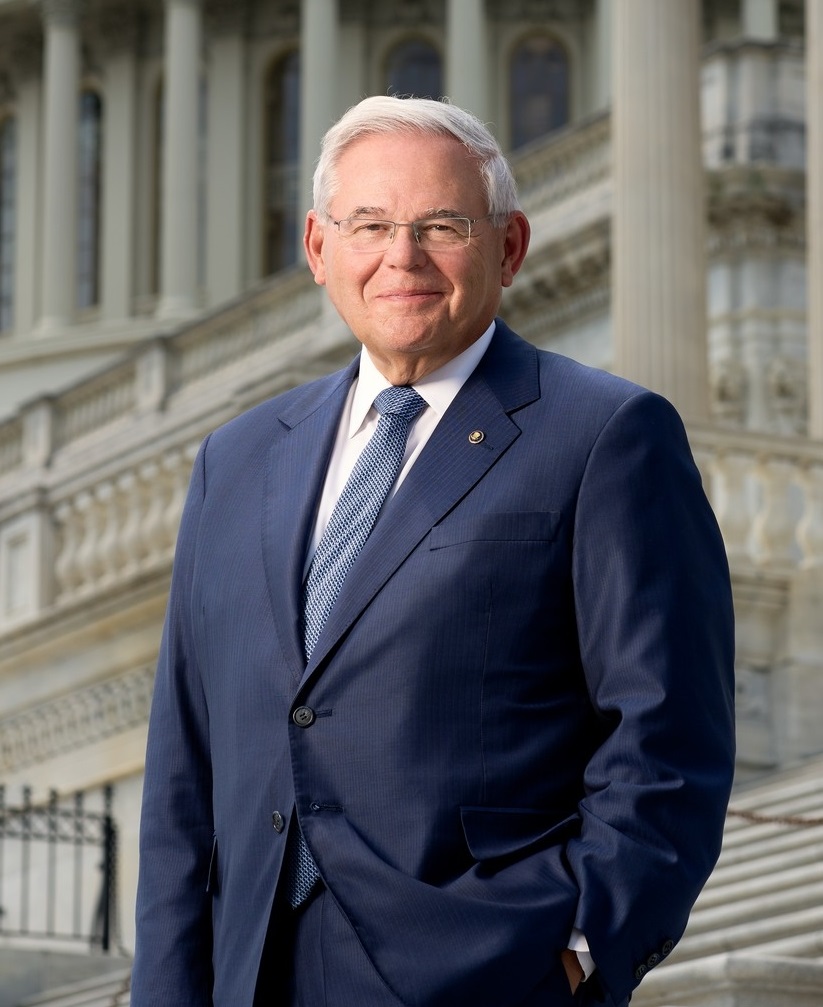
Trump Said No to a Menendez Pardon. So Why Are Bettors Piling In?
The White House has been explicit: President Trump is not considering a pardon for Bob Menendez. The New York Times reported as much in January 2026, a denial that landed with unusual specificity for a clemency question. No hedging, no "all options remain on the table" phrasing. Just a flat no.
And yet, prediction markets have moved sharply in the opposite direction. Menendez's implied probability in the "Who will Trump pardon before 2027?" market has surged from 13% to 24% over the past three days, an 11-percentage-point jump that nearly doubles his odds of receiving clemency before the end of the year. No corroborating news event, no leaked memo, no Fox News trial balloon preceded the move. This is a market actively disagreeing with stated presidential intent.
The central question is straightforward: are bettors pricing in information the rest of us don't have, or are they making a speculative wager that Trump's denials are negotiable? The answer depends on how seriously you take White House statements about pardons, and the historical record on that score is not reassuring.
Bob Menendez's Conviction, Trump's Orbit, and the Case That Won't Die Quietly
Bob Menendez served as a Democratic U.S. Senator from New Jersey for nearly two decades before his world collapsed. In July 2024, a federal jury convicted him on bribery charges that included accepting gold bars, cash, and a Mercedes-Benz convertible in exchange for wielding his Senate influence on behalf of foreign governments and businessmen. The evidence was damning and granular: prosecutors produced photographs of gold bars stacked in the senator's home and traced payments through a web of intermediaries. On January 29, 2025, a federal judge sentenced him to 11 years in prison.
What makes the pardon question live, rather than absurd, is what Menendez said next. At his sentencing, he denounced the Department of Justice as "political and corrupted to the core" and expressed hope that Trump would "clean up the cesspool and restore the integrity to the system." That language was deliberate. Menendez, a lifelong Democrat, was framing his prosecution as exactly the kind of DOJ overreach that Trump has railed against for years. He began serving his sentence on June 17, 2025.
The pardon pitch has not been a solo effort. Menendez's co-conspirator, Fred Daibes, has separately lobbied Trump insiders for clemency, creating a parallel track of influence that keeps the question in front of people who have the president's ear. Trump has a documented history of pardoning political figures who align themselves with his narrative of prosecutorial abuse: Dinesh D'Souza, Joe Arpaio, Steve Bannon. A Democrat who publicly echoes Trump's DOJ grievances fits neatly into that pattern.
The Menendez Pardon Market in Real Time: A Near-Doubling That Defies the News Cycle
The numbers tell a story the news cycle cannot explain. On approximately March 29, Menendez sat at 13% implied probability. By April 1, he had reached 24%. That 11-percentage-point move occurred without a single public development: no court filing, no political endorsement, no cable news segment floating the idea.
A notable divergence exists across platforms. Kalshi prices Menendez at 10%, while Polymarket has him at 38%. That 28-percentage-point gap is enormous and suggests that the two markets are drawing from different pools of conviction. The spread is unreliable as a consensus signal, but the Polymarket side of the trade appears to be driving the aggregate move upward. When one platform prices an outcome nearly four times higher than another, either arbitrage opportunities exist or the two markets are capturing fundamentally different information sets.
No clear catalyst has emerged to justify the surge. I searched for breaking reports, social media chatter from Trump allies, and any legal filing that might reopen the question. I found nothing. The most honest interpretation is that this move is either speculative positioning by a small number of traders who believe the White House denial is soft, or it reflects private information that has not yet surfaced publicly.
Four Reasons Bettors Think the White House Denial Doesn't Close the Door
The bull case for a Menendez pardon rests on arguments that are uncomfortable but not irrational.
First, Trump's pardon denials have historically been unreliable. Before pardoning Steve Bannon in January 2021, Trump allies publicly downplayed the likelihood for weeks. The White House's stated position and its eventual action diverged completely. Bettors who remember that episode have reason to discount a formal "no."
Second, Menendez's rhetorical alignment with Trump is genuine and deepening. By calling the DOJ "corrupted to the core," Menendez adopted Trump's exact vocabulary. A pardon would let Trump claim bipartisan validation of his prosecutorial abuse narrative without any political cost. Menendez is no longer a sitting senator; pardoning him doesn't empower a Democratic rival.
Third, the Daibes lobbying channel creates a backdoor. Pardon decisions in the Trump White House have historically been influenced by personal intermediaries rather than formal DOJ review. The fact that Daibes is actively working Trump insiders means the request is reaching decision-makers through informal channels that bypass the official denial.
Fourth, nine months remain before resolution. The market resolves on December 31, 2026. Presidential pardons frequently come in bursts, particularly around holidays and year-end political windows. A 24% probability over a nine-month horizon with an unpredictable executive is not extravagant. It implies roughly a one-in-four chance that any of dozens of possible scenarios breaks Menendez's way.
The Strongest Case Against: Why 24% May Still Be Too High
The bear case is simpler and arguably stronger. Start with the crime itself: Menendez was convicted of acting as a foreign agent. He accepted payments from the governments of Egypt and Qatar in exchange for official acts. This is not a campaign finance technicality or a process crime. It is the most politically toxic category of corruption for a president to forgive, especially one who ran on "America First."
Trump's own political calculus cuts against it. Pardoning a Democrat convicted of taking foreign bribes would hand opponents a ready-made attack line, one that resonates with Trump's own base. Unlike pardoning a loyalist who committed crimes in service of the president's agenda, pardoning Menendez would carry no factional reward and considerable downside risk.
Then there is the simplest data point of all. As recently as January 2026, Trump's own team told the New York Times the pardon was not under consideration. That denial was not anonymous or hedged. Taking the White House at face value, 24% is far too high, and the correct price is closer to Kalshi's 10%.
What This Market Is Really Pricing
This is a market that has decoupled from public information. The 11-percentage-point surge over three days, absent any catalyst, looks like either a speculative bet that Trump's word on pardons is unreliable, or a thin market being pushed by a small number of conviction traders on Polymarket. Both explanations are plausible. Neither is fully satisfying.
My read: the 38% Polymarket price is too aggressive given the explicit White House denial and the political toxicity of the underlying conviction. The 10% Kalshi price may be too dismissive given Trump's track record of reversals on clemency. A fair value for Menendez sits somewhere in the low teens, which means the composite 24% figure overstates the probability by roughly 10 percentage points. But with nine months of runway and a president who treats pardons as personal prerogatives rather than institutional processes, this market will stay volatile. The bettors aren't irrational. They're just pricing in a president who has proven, repeatedly, that "no" doesn't always mean no.
Join our Discord for breaking news alerts, driven by real-time movements in prediction markets.
Free Trading Tools
View allCompare fees across Kalshi, Polymarket & PredictIt.
Find fair probabilities with the overround removed.
See if a trade has positive EV before you enter.
Convert American, decimal & implied probability.
Combined odds and payouts for multi-leg bets.
Your real take-home after fees and taxes.