
Will Trump Pardon Menendez? Markets Price 24% Despite His Denial
Pardon probability climbed 9 percentage points in three days despite Trump's named, on-record January 2026 refusal; Polymarket prices the outcome at 38%.
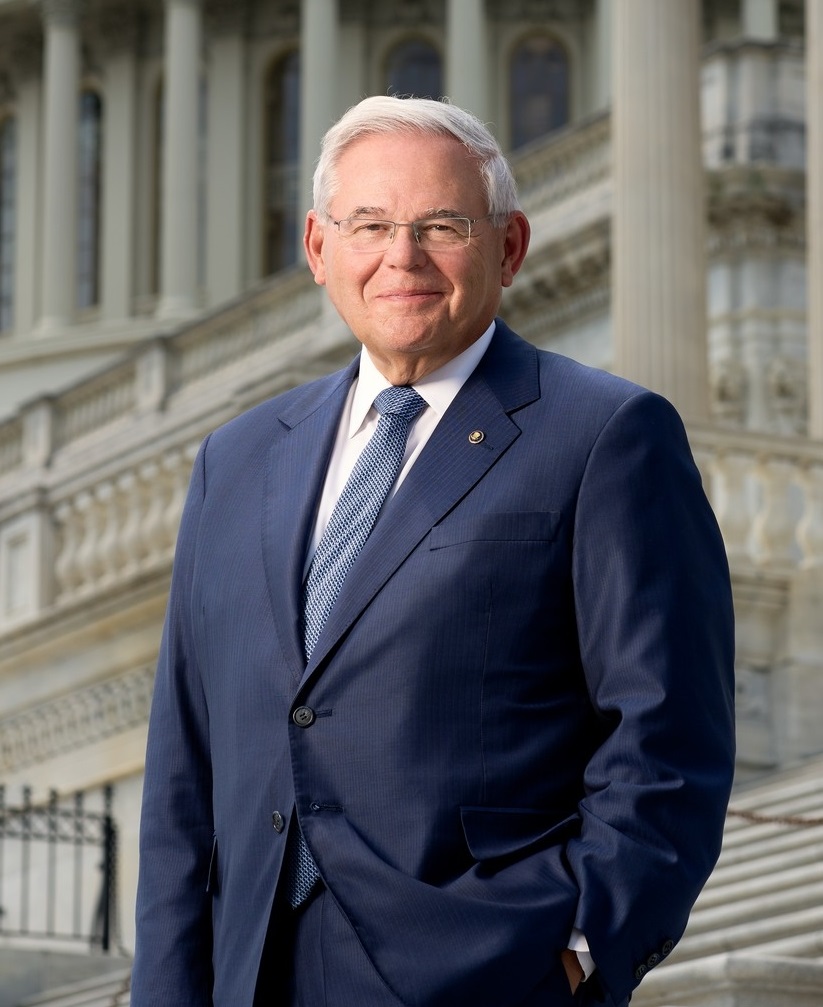
Trump Said He Won't Pardon Bob Menendez, So Why Are Odds Climbing?
In January 2026, President Donald Trump told the New York Times he would not pardon former Senator Bob Menendez, naming him specifically alongside Sean Combs and Sam Bankman-Fried. That statement was unambiguous. It was on the record. And as of this week, the prediction market for "Who will Trump pardon before 2027?" is treating it as noise.
Menendez's implied probability of receiving a presidential pardon before the end of 2026 has surged from 15% to 24% over the past three days, a 9-percentage-point move. Since the contract's period low of 11%, the total swing is 13 percentage points. This is not a market drifting on thin volume. This is a directional bet against a named presidential denial, and traders are putting capital behind it.
The pattern is unusual. Markets typically compress toward zero when a president explicitly rules out clemency for a specific individual. The opposite is happening here. Either the market has information that contradicts the public record, or it has learned to discount Trump's stated positions on pardons with a reliability adjustment that no other president has required.
Bob Menendez Pardon Odds Live: Tracking the 9-Percentage-Point Surge in Real Time
The current blended probability sits at 24%, but the per-platform divergence is worth noting. Kalshi prices Menendez at 10%, while Polymarket has him at 38%. That spread is wide enough to undermine any confident reading of "the market" as a single entity. The platforms are not in agreement. Polymarket's traders are far more bullish on a pardon than Kalshi's, suggesting different information sets, different user bases, or different risk appetites driving the two prices.
What both platforms share is directional momentum. Neither is falling. The entry point three days ago was 15%, and the move to 24% has been steady rather than spike-driven. No single catalyst appears in the news cycle. There has been no new public statement from Menendez, no White House leak, and no court filing that would change the pardon calculus. The move is happening in an information vacuum, which makes it harder to dismiss as reactive noise.
The Price Chart Reveals When Menendez Odds Broke Away
The critical observation is timing. Trump's denial came in January 2026. The contract's period low of 11% arrived afterward, consistent with the market initially absorbing the denial at face value. Then the reversal began. By early April, the price had more than doubled from its floor without a corresponding news event.
This pattern suggests one of two things: either informed traders accumulated positions while the denial held the price artificially low, or the market is repricing the credibility of the denial itself as time passes. Both interpretations point to the same conclusion. The further Trump gets from his January statement, the less the market trusts it.
The Blagojevich precedent looms large. Trump commuted Blagojevich's 14-year sentence in February 2020 despite years of public ambiguity. Blagojevich, like Menendez, was a Democrat convicted of corruption. Blagojevich, like Menendez, adopted Trump-friendly rhetoric after sentencing. And Blagojevich had a personal connection to Trump through Celebrity Apprentice, a factor that traders may view as a template rather than an exception.
Why Markets May Be Discounting Trump's 'No Pardon' Statement on Menendez
The bull case for Menendez pardon contracts rests on a structural argument about how Trump uses clemency. In his first term, Trump granted 144 pardons and 94 commutations, frequently exercising that power late in his term. Several recipients were people Trump had previously distanced himself from or declined to discuss. The market may be pricing not the probability that Trump meant what he said in January, but the probability that he will still mean it in December.
Menendez's post-conviction behavior fits a pattern that has preceded past Trump clemency actions. After his sentencing to 11 years in prison, Menendez publicly declared that "President Trump is right. This process is political and it's corrupted to the core." He praised Trump on social media and attacked Democrats, including Barack Obama. He reframed his own prosecution using the same "weaponized DOJ" language that Trump has used since 2022. These are not subtle moves. They are a public audition for clemency, and the market is pricing the possibility that the audition works.
There is also the foreign policy angle. Menendez was convicted on charges involving Egyptian and Qatari officials. His case intersects with Middle East diplomacy in ways that could create leverage or motivation for a pardon that has nothing to do with Menendez personally.
The Case Against: Why 24% May Still Be Too High
The strongest counterargument is straightforward: Trump said no, by name, on the record, and Menendez has no personal relationship with the president. Unlike Blagojevich, who appeared on Celebrity Apprentice, or Rudy Giuliani, who served as Trump's personal attorney, Menendez was a Democratic senator who criticized Trump's foreign policy and accused him of undermining the Covid-19 response as recently as 2020.
The rhetorical pivot Menendez executed after conviction may be too transparent to succeed. Trump has shown a preference for pardoning allies who were loyal before their legal troubles, not opponents who converted after sentencing. The "weaponized DOJ" framing only works if Trump believes the pardon advances his own narrative. In Menendez's case, the underlying conviction involved accepting gold bars and cash from foreign governments, a fact pattern that is difficult to recast as political persecution.
The Kalshi price of 10% may reflect this reality more accurately than Polymarket's 38%. The wide spread between platforms is itself a warning: when two markets disagree by 28 percentage points, at least one of them is badly mispriced. Traders buying Menendez contracts at 38% on Polymarket are making an aggressive bet that Trump will reverse a named denial for a man he has no personal history with, in a case involving bribery by foreign agents. That is a high bar.
What Resolves This Market and What to Watch
The contract resolves on December 31, 2026. That leaves roughly nine months of potential action, and the historical pattern for Trump pardons favors late-term clusters. If a pardon comes, it is far more likely in November or December than in the spring.
Watch for three signals. First, any public communication between Menendez's legal team and the White House, even informal back-channels reported by outlets covering the clemency pipeline. Second, any shift in Trump's rhetoric about the DOJ's handling of Democratic officeholders, which could create political cover for a Menendez pardon. Third, the Polymarket-Kalshi spread: if Kalshi begins converging upward toward Polymarket's price, that suggests the bull case is gaining credibility across platforms rather than being driven by a single cohort of speculative traders.
At 24% blended probability, the market is saying there is roughly a one-in-four chance that Trump will pardon a man he explicitly said he would not pardon. That price embeds a specific claim about presidential credibility. It says Trump's word, even when given by name and on the record, carries a roughly 76% reliability rate on clemency decisions. Whether that discount is too generous or too harsh will be answered by year's end.
Join our Discord for breaking news alerts, driven by real-time movements in prediction markets.
Free Trading Tools
View allCompare fees across Kalshi, Polymarket & PredictIt.
Find fair probabilities with the overround removed.
See if a trade has positive EV before you enter.
Convert American, decimal & implied probability.
Combined odds and payouts for multi-leg bets.
Your real take-home after fees and taxes.