
Will Trump Visit Arizona Before 2027? Market Hits 88%
A confirmed April 17 Phoenix rally drove an 18-point surge, yet a 12% discount persists with public registration already open and a 2 p.m. speaking slot listed.
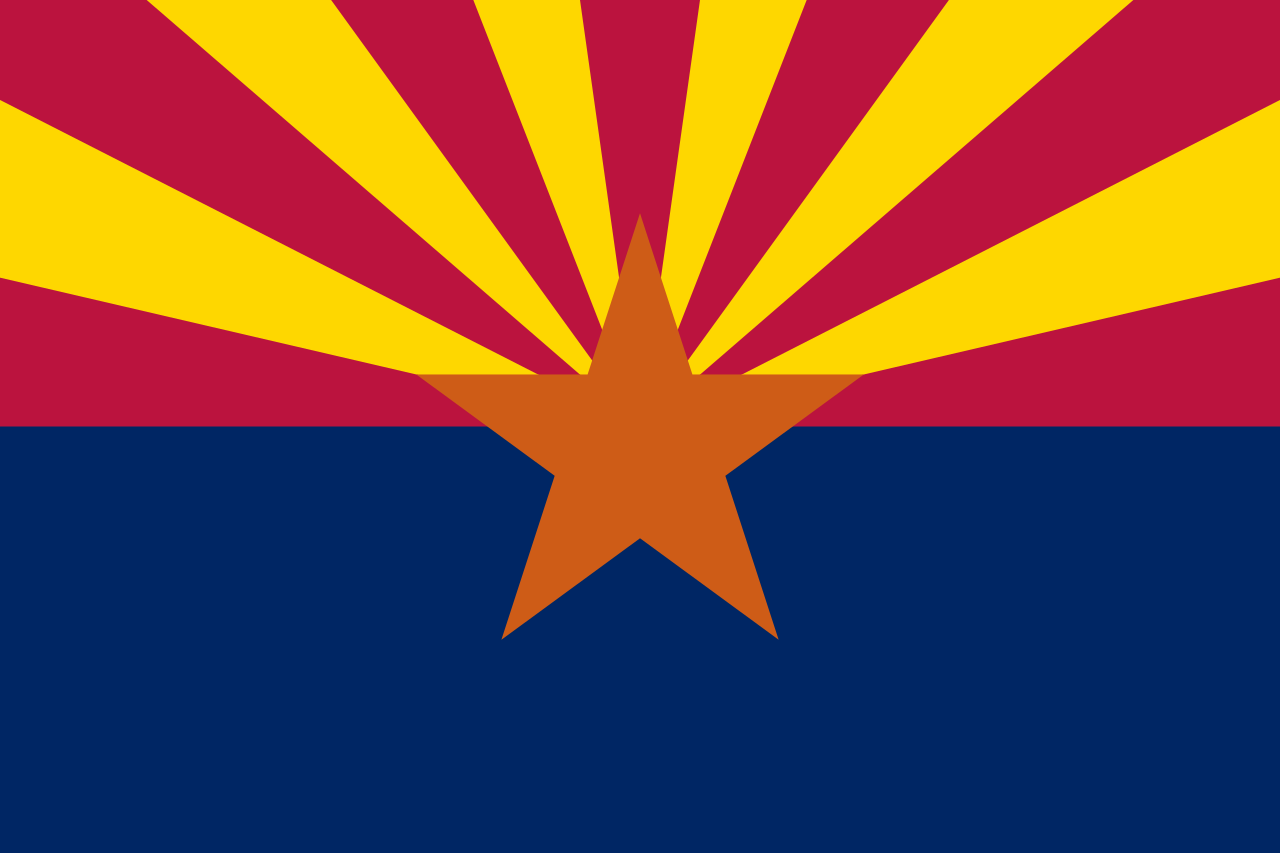
Turning Point USA announced on March 31 that President Donald Trump will appear at Dream City Church in Phoenix on April 17 for a "Build the Red Wall" rally, with public registration already open and a 2 p.m. speaking slot listed on the organization's website. Rep. Andy Biggs and Turning Point CEO Erika Kirk are confirmed co-speakers. The venue, the date, and the Secret Service logistics guidance are all public. This is not a rumor. It is a planned presidential event with a registration page.
Within 72 hours of that announcement, Arizona's implied probability in the "Which states will Trump visit before 2027?" prediction market surged from 71% to 88%, an 18-percentage-point repricing across both Kalshi and Polymarket. The move is enormous by the standards of a binary event contract. Yet the contract still trades at a 12-percentage-point discount to certainty, raising a straightforward question: what risk, exactly, is the market pricing in?
Trump's April 17 Phoenix Rally Is Real, Ticketed, and Happening
The facts here are unusually clean. Turning Point USA has opened public registration for the April 17 event at Dream City Church near Cave Creek Road and Sweetwater Avenue in Phoenix. Doors open at 10 a.m. Remarks begin at 2 p.m. Per Secret Service guidance relayed by Turning Point, outside drinks and bags will be prohibited inside the venue, and detailed logistics will be sent to registrants the evening before the event, according to the Arizona Republic.
This is Trump's first return to Arizona since a memorial event for the late Charlie Kirk at State Farm Stadium in Glendale in September 2024. The "Build the Red Wall" branding reflects Turning Point's broader midterm strategy targeting Arizona, Nevada, and New Hampshire. Trump's endorsement of Biggs in the Republican gubernatorial primary gives the Phoenix stop an added political dimension: Arizona's governor's race, where polls show Democratic incumbent Katie Hobbs leading Biggs by roughly 6.7 points, makes the state a genuine battleground.
The rally announcement is the story. But the market hasn't closed the gap to certainty, and that residual discount is the central puzzle worth investigating.
How Arizona's Prediction Market Odds Moved From 71% to 88%
Before March 31, Arizona sat at 71% in this market. That price implied roughly a three-in-ten chance that Trump would not set foot in the state before year-end. Given Arizona's political importance and Trump's history of frequent rallies there, 71% already seemed conservative. The announcement obliterated that uncertainty in a matter of days.
The 18-percentage-point move over three days is characteristic of a news-driven repricing rather than speculative drift. When a confirmed event with a specific date, venue, and registration system enters the information set, the market's job is to converge on the new reality. Arizona's contract did exactly that, but stopped short. The pace of buying suggests informed participants moved quickly once the Turning Point announcement dropped, but the final leg to 95% or higher has not materialized.
Cross-platform pricing tells part of the story. Kalshi currently shows Arizona at 86%, while Polymarket prices the same outcome at 91%. That 5-percentage-point spread between platforms is wider than you would expect for a near-resolved binary event, and it suggests either thin liquidity on one side or differing participant risk appetites. Both numbers, however, agree on the same basic message: Arizona is overwhelmingly likely to resolve yes, but is not being treated as a certainty.
Check Arizona's Current Odds in the 'Trump State Visits' Market
Arizona's contract resolves positively if Trump makes any confirmed visit to the state before December 31, 2026. The April 17 rally is not the only possible resolution trigger. Any presidential travel to Arizona for any purpose, whether a campaign event, a policy tour, or even a refueling stop, would count. The market currently prices this at 88%.
For context, buying Arizona at 88% means paying 88 to receive 100 if Trump visits the state at any point in the remaining nine months of 2026. The maximum upside is roughly 14% on capital. That is a thin return for a near-certainty, but an unusually fat return if the true probability is above 98%.
The resolution window is generous. Even if the April 17 event were canceled, Trump would have eight and a half months to visit Arizona for any reason. The state's role in the 2026 midterms, its contested gubernatorial race, and its six Republican-held U.S. House seats all create natural reasons for a presidential visit. The question is not really whether Trump will visit Arizona before 2027. The question is why the market is behaving as though there is a meaningful chance he won't.
Why Isn't Arizona at 97%? The Steelman Case Against a Sure Thing
The strongest case for the remaining 12-percentage-point discount rests on three factors, each with varying degrees of plausibility.
First, rally cancellations do happen. Health emergencies, security threats, weather events, or sudden changes in presidential scheduling can all derail a confirmed appearance. Trump has canceled or postponed rallies before, though rarely ones with this much organizational infrastructure already in place. Turning Point USA has already opened registration for the April 17 event at Dream City Church, with Trump's 2 p.m. speaking slot officially listed on the organization's website. That level of commitment historically precedes presidential appearances at a very high completion rate. Cancellation is possible but highly unlikely.
Second, some traders may be pricing platform-specific settlement risk. Prediction markets occasionally interpret resolution criteria in unexpected ways. If a trader is uncertain whether a brief airport layover counts as a "visit," they might discount the contract slightly. This is a thin argument given that a full rally clearly qualifies, but it exists.
Third, and most practically, the 12-percentage-point gap may simply reflect the cost of capital and the time value of money. A contract sitting at 88% with nine months to resolution ties up capital for a small return. Sophisticated traders may prefer to deploy that capital elsewhere, leaving the contract slightly mispriced because no one finds it profitable enough to close the gap. This is a market microstructure explanation, not a fundamental one, but it is probably the most honest account of why Arizona has not yet reached 97%.
The Bottom Line: Arizona Is Mispriced, and the Market Knows It
The math here is straightforward. A confirmed, ticketed, logistically planned presidential rally in Phoenix on April 17 makes Arizona's resolution overwhelmingly likely within two weeks, let alone by year-end. The 88% implied probability understates the true likelihood of a Trump visit. The remaining discount is best explained by thin liquidity and capital opportunity costs, not by genuine uncertainty about whether this event will occur. Arizona is, for all practical purposes, a lock. The market just hasn't finished saying so.
Join our Discord for breaking news alerts, driven by real-time movements in prediction markets.
Free Trading Tools
View allCompare fees across Kalshi, Polymarket & PredictIt.
Find fair probabilities with the overround removed.
See if a trade has positive EV before you enter.
Convert American, decimal & implied probability.
Combined odds and payouts for multi-leg bets.
Your real take-home after fees and taxes.