
Menendez Pardon Odds Drop 9 Points to 14% After Speculative Surge Unwinds
A round-trip from 14% to 23% and back with zero news catalysts confirms last week's spike was froth, not signal. Trump's January denial holds.
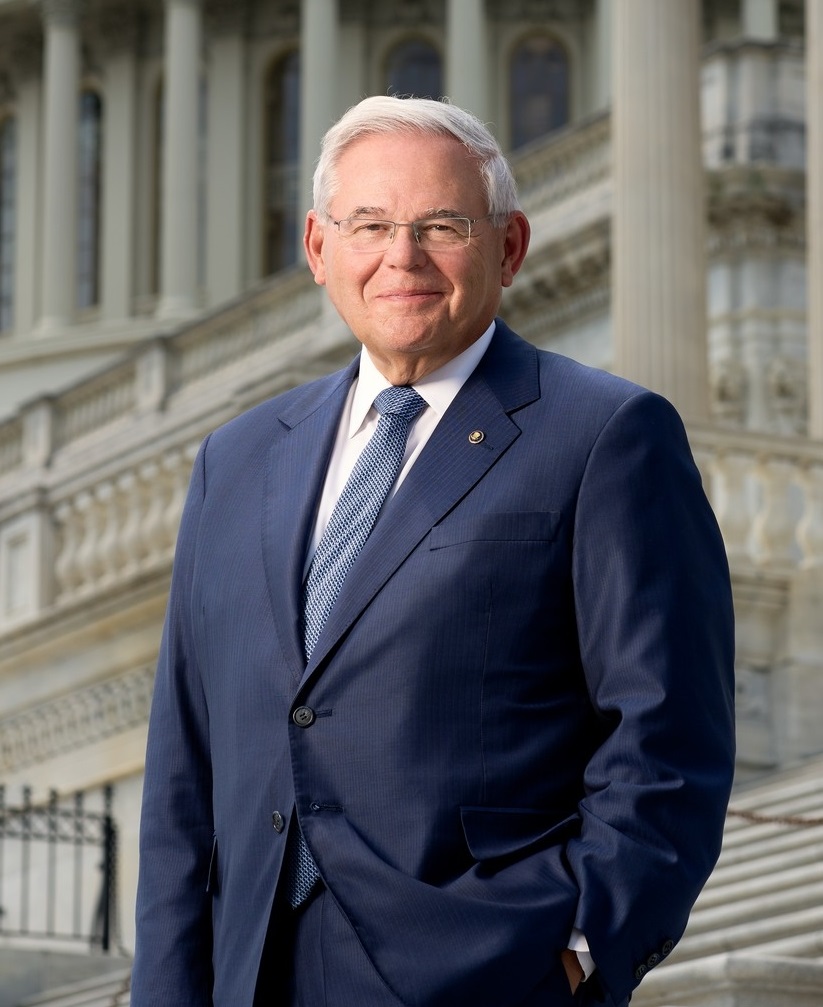
Bob Menendez Pardon Odds Crater 9 Points as Market Snaps Back to Reality
Former Senator Bob Menendez is serving an 11-year federal prison sentence for bribery and corruption. Nothing about his legal situation changed last week. Nothing changed this week either. Yet prediction markets just completed a full round-trip on his pardon odds, surging 9 percentage points and then giving back every point gained, all without a single identifiable news catalyst in either direction.
The implied probability that President Trump will pardon Menendez before the end of 2026 now sits at 14%, down from 23% three days ago. That 9-point decline exactly mirrors the 9-point surge that Prediction Hunt documented on April 8, when the contract climbed from roughly 15% to 24%. The market has returned to where it started, and the episode looks increasingly like a textbook case of speculative froth in a low-attention contract.
The per-platform split adds context. Kalshi prices a Menendez pardon at 10%. Polymarket prices it at 17%. That 7-point spread suggests the two user bases are drawing different conclusions from identical public information, a pattern common in prediction markets where retail sentiment on one platform can diverge from institutional-leaning pricing on another.
The Phantom Rally: Why Last Week's Menendez Surge Never Made Sense
Reconstructing the timeline exposes how hollow the rally was. Between approximately April 5 and April 8, Menendez's blended probability climbed from the mid-teens to 23-24%. During that window, no Trump administration official commented on clemency. No DOJ filing surfaced. No Menendez legal team statement appeared. No Congressional ally made a public appeal. The information environment was perfectly static.
In prediction markets, unexplained moves in low-attention contracts typically reflect one of two dynamics: a single large position shifting a thin order book, or a cluster of retail traders following momentum rather than information. Both produce price action that looks like signal but carries no durable information content. The hallmark of this pattern is a rapid reversal once the buying pressure exhausts itself, which is exactly what happened here.
The contract's period low of 12% provides the full picture. From that floor, the market swung 11 points higher to 23%, then retreated to 14%, just 2 points above the low. The entire episode describes a parabolic move and collapse with no fundamental anchor at any point along the curve.
Trump Said No in January 2026, and the Market Is Finally Listening on Bob Menendez
The informational bedrock for this contract remains Trump's own words. In a January 2026 interview with the New York Times, Trump explicitly named Menendez alongside Sean Combs and Sam Bankman-Fried as individuals he would not pardon. That statement was on the record, specific, and unprompted. It was not a dodge or a deflection. The president named names.
The market initially absorbed that denial. Prices compressed toward the period low of 12% in the weeks following the interview, consistent with how prediction markets normally treat an explicit presidential statement. What followed was abnormal: a 13-point rally off the low despite no contradicting information. The current correction to 14% represents the market re-anchoring to the strongest available signal, which is the denial itself.
A 14% implied probability still prices meaningful residual uncertainty. In plain terms, the market is saying there is roughly a 1-in-7 chance that Trump reverses his stated position before December 31, 2026. That is not zero. It reflects a recognition that Trump's public statements on clemency have not always predicted his actions. He pardoned several individuals during his first term after initially distancing himself from their cases. The market is pricing the gap between what Trump says and what Trump does.
The Case FOR a Menendez Pardon: What Would Need to Be True for the Market to Be Wrong
Dismissing the bull case entirely would be intellectually dishonest. Several conditions could make 14% look cheap in hindsight.
First, Trump's pardon record includes reversals. His first-term clemency grants to figures like Michael Flynn and Steve Bannon came after periods where pardons appeared unlikely. The pattern of denial-then-action is not hypothetical; it has precedent. Menendez, a former Senate Foreign Relations Committee chairman, carries political capital that could become useful to the administration under the right circumstances.
Second, Menendez's 11-year sentence is severe relative to the charges, and sympathetic media framing of an aging former senator in federal prison could create public pressure that did not exist in January. Political dynamics shift. A midterm election approaching in November 2026 could create incentive structures that don't currently exist, particularly if Trump seeks to signal bipartisan magnanimity.
Third, the Kalshi-Polymarket spread of 7 points (10% vs. 17%) means the "market" is not a single entity with a single opinion. Polymarket's higher price could reflect information or conviction that Kalshi's user base lacks. Until the spread compresses, uncertainty is real.
That said, none of these scenarios currently have evidence behind them. They are plausible pathways, not probable ones. The contract resolves on December 31, 2026, leaving roughly eight and a half months. For the bull case to materialize, something concrete needs to change: a White House signal, a legal filing, a political development. Until then, the market's correction from 23% to 14% looks like rationality returning, not opportunity departing. The most reliable data point remains a president who said no, on the record, by name.
Join our Discord for breaking news alerts, driven by real-time movements in prediction markets.
Free Trading Tools
View allCompare fees across Kalshi, Polymarket & PredictIt.
Find fair probabilities with the overround removed.
See if a trade has positive EV before you enter.
Convert American, decimal & implied probability.
Combined odds and payouts for multi-leg bets.
Your real take-home after fees and taxes.