

Is Kalshi Legit?
A deep dive into Kalshi's regulation, legal risks, and user experience.
What Is Kalshi?
Kalshi is a U.S.-based event-contract trading / prediction market platform. Its model works by letting users buy or sell yes/no contracts on outcomes (for example, "Will core CPI rise by more than 0.3% this month?"). Each contract trades between 1¢ and 99¢, and the winning side ends up paying $1 for each contract held. In the long run, prices map generally to probabilities. If an event contract is priced at 99¢, it's extremely likely to happen; if it's priced at 1¢, it will be extremely unlikely to happen.
It's not just a casual betting app — Kalshi aims to operate more like a financial exchange, playing by regulatory rules and positioning itself as a legal alternative to unregulated prediction markets. For a detailed look at what you'll actually pay per trade, see our Kalshi fees breakdown.
Regulatory Status: What Makes It "Legit"
One of Kalshi's biggest claims to legitimacy is that it is registered with the U.S. Commodity Futures Trading Commission (CFTC) as a Designated Contract Market (DCM). That's a registration status akin to what major derivatives exchanges have. That means it's operating under U.S. federal oversight in principle — not just some offshore, lightly regulated "betting site." Relative to the offshore sportsbooks that exist today, Kalshi is on more secure footing from a regulatory perspective.
Legal & Geographic Availability
Because of this regulatory structure, many sources state Kalshi is legal and widely available across the U.S. Still, there are legal tensions around whether certain types of event contracts — especially those that look very much like sports bets — should fall under state gambling laws in addition to federal oversight.
The Tension: Sports, Betting Laws & State Scrutiny
One of the biggest headaches — and the area where legitimacy is most challenged — is sports-related event contracts. Several U.S. states have pushed back, issuing cease-and-desist orders or opening legal inquiries, claiming that Kalshi's sports contracts are really just illegal sports betting under a different name.
In fact, Massachusetts' Attorney General has filed a suit accusing Kalshi of operating "illegal sports wagering" disguised as "event contracts." Kalshi has defended itself, arguing that its model is different and that it should be regulated under the federal derivatives regime. The legal friction is very real — and it introduces risk, especially depending on which state you're in.
My Verdict: Is Kalshi Legit Enough to Trust?
The short answer: largely yes — with caveats. Being CFTC-regulated and operating under U.S. regulatory oversight is more than many prediction or betting sites can claim. Kalshi's offering isn't a fly-by-night casino; it has infrastructure, institutional backing, and real-world scrutiny.
However, "legit" does not mean "without risk." The legal ambiguity around sports contracts adds a layer of uncertainty — especially for users in states like Massachusetts. There are also broader questions about insider trading and market integrity that apply to prediction markets as a whole. In the worst case, parts of the platform could be restricted or shut down in certain jurisdictions.
If you approach Kalshi, treat it like any speculative financial tool: start small, verify withdrawals, and be aware of regulations in your state.
Tips If You Decide to Use It
- Start with small amounts — test deposits and tiny trades first.
- Verify withdrawals — make sure the flow works with your bank or card.
- Check your state's laws — federal status isn't always the end of the story.
- Document everything — keep screenshots and records.
- Use it as a prediction tool, not pure gambling — treat contracts as probability plays rather than sure bets.
In conclusion: by most reasonable definitions, Kalshi is a legitimate platform — but its legitimacy is conditional on legal battles that have to play out. If you're cautious and informed, it can be an intriguing space to explore. But don't treat it like a risk-free or guaranteed win.
Build with this data
Automate your strategies, create arb bots, or build your own dashboard. Free tier includes 1,000 requests/mo across all prediction market platforms.
Free Trading Tools
View allCompare fees across Kalshi, Polymarket & PredictIt.
Find fair probabilities with the overround removed.
See if a trade has positive EV before you enter.
Convert American, decimal & implied probability.
Combined odds and payouts for multi-leg bets.
Your real take-home after fees and taxes.
Related Posts

Is Insider Trading on Prediction Markets Illegal? What Kalshi and Polymarket Traders Need to Know
A Kalshi trader was fined $20,000 for insider trading in 2026. Israeli authorities arrested bettors over Iran military bets. Here's where the legal line actually is.
8 min readRead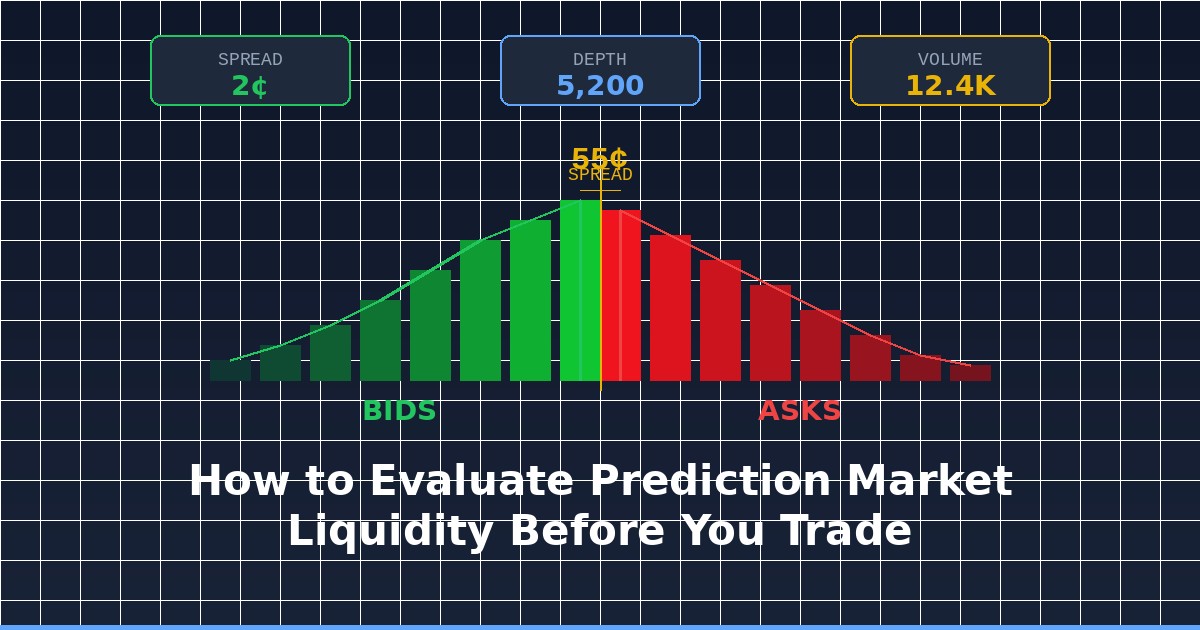
How to Evaluate Prediction Market Liquidity Before You Trade
A practical guide to checking depth, spreads, and fill quality before you commit capital. Stop getting worse prices than you expected.
9 min readRead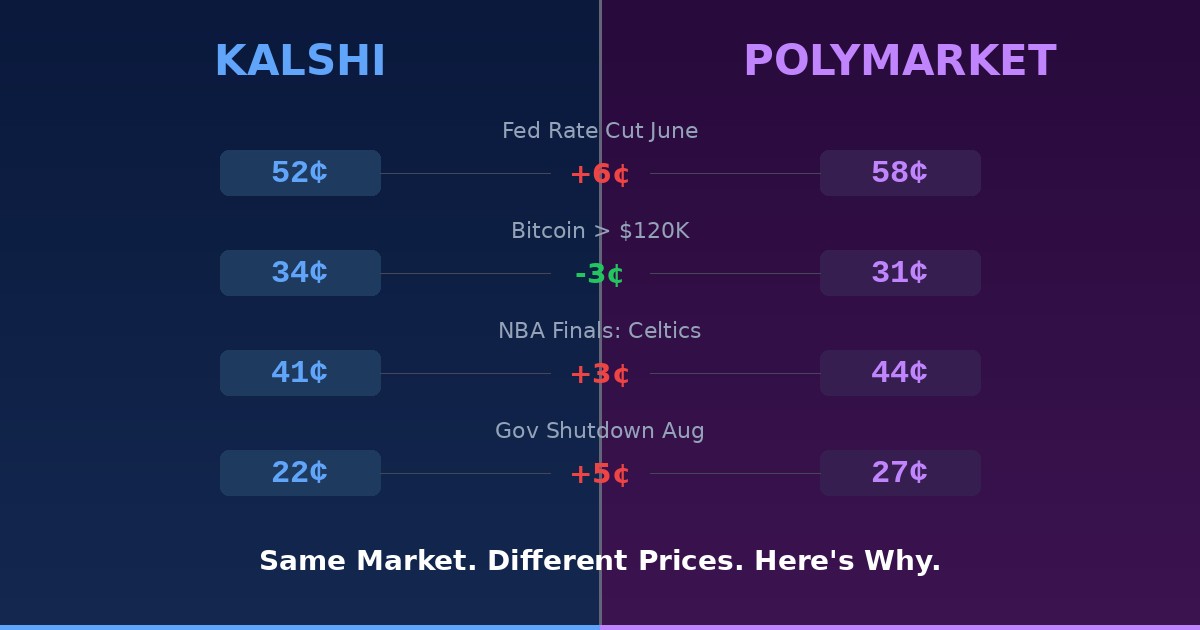
Why the Same Market Has Different Prices on Kalshi vs Polymarket
The same question can trade at 52¢ on one platform and 58¢ on another. It's not a glitch — it's liquidity, demographics, fees, and market structure. Here's what drives the gap.
7 min readRead