


Is Insider Trading on Prediction Markets Illegal? What Kalshi and Polymarket Traders Need to Know
A Kalshi trader was fined $20,000 for insider trading in 2026. Israeli authorities arrested bettors over Iran military bets. Here's where the legal line actually is.
TL;DR: Insider trading on prediction markets is illegal under CFTC commodity law. Two 2026 cases — a $20K Kalshi fine and Israeli arrests over Iran military bets on Polymarket — confirmed active enforcement. Trading on your own research is fine. Trading on confidential professional information is not.
Two enforcement actions in early 2026 answered a question that prediction market traders had been debating since Kalshi launched: yes, insider trading on prediction markets is illegal, and yes, regulators will come after you for it.
The first case was a $20,000 fine on Kalshi. The second involved arrests by Israeli authorities over classified military intelligence used to place bets on Polymarket. Together, they drew a line that every trader on these platforms needs to understand.
The Short Answer
Insider trading on prediction markets is illegal under federal law — specifically 7 U.S.C. Section 6(c)(1) and CFTC Regulation 180.1. These are the same anti-manipulation and anti-fraud provisions that govern commodity futures and swaps markets. If you trade on material non-public information obtained through employment or a position of trust, you are breaking the law.
This isn't theoretical. It's being enforced right now.
How Kalshi and Polymarket Handle It Differently
Before diving into the cases, it's worth understanding how differently the two dominant platforms approach this issue — because the contrast is stark.
Kalshi's approach: proactive enforcement. Kalshi operates as a CFTC-regulated Designated Contract Market and takes an aggressive stance on market integrity. Their surveillance team runs active monitoring across all contracts, flagging unusual position concentrations, anomalous timing patterns, and trading activity that correlates with non-public events. They've opened 200+ investigations. They self-reported the MrBeast editor case to federal regulators. They've explicitly stated that insider trading is "illegal and immoral." They maintain a dedicated Market Integrity Hub. In short, Kalshi treats insider trading the way a traditional financial exchange would — as a compliance obligation, not a philosophical question.
Polymarket's approach to insider trading differs significantly from Kalshi's. Polymarket CEO Shayne Coplan told Axios it was "super cool" that the platform "creates this financial incentive for people to go and divulge the information to the market" — including insiders. The argument: insider information flowing into markets makes those markets more accurate and valuable as forecasting tools. If someone with real knowledge trades on it, the price moves toward truth faster.
The counterargument is straightforward: this position may not survive CFTC scrutiny, especially after the Iran cases demonstrated real-world harm from insider-driven trading. There's a meaningful difference between "markets should reflect all available information" and "it's fine for people to profit from classified intelligence." Polymarket's decentralized structure makes enforcement harder — but as the Israeli arrests showed, not impossible.
What Actually Happened: Two Cases That Changed Everything
The MrBeast Editor Case (February 2026)
An editor who worked for YouTube creator MrBeast was caught trading on Kalshi using insider knowledge of upcoming video outcomes and events — the kind of information only someone inside the production would have access to before publication.
Kalshi's surveillance system flagged an unusual concentration of positions in specific contracts tied to upcoming video releases — a pattern of correctly-timed bets that was inconsistent with any publicly available information at the time. The result: a $20,000 fine and a two-year suspension from the platform. Kalshi reported the case to federal regulators.
This wasn't an isolated investigation. Kalshi has stated publicly that its market integrity team has opened over 200 insider trading investigations in the past year, with 12 still ongoing at the time of the announcement. This was the first widely publicized enforcement action on a U.S. prediction market — and it sent a clear message that these platforms are watching.
The Iran Military Bets (March 2026)
CNN reported that Israeli authorities arrested several individuals — and charged two — on suspicion of using classified military information to place bets on Polymarket about upcoming military operations in Iran. The bets were placed before the operations were publicly announced, strongly suggesting the traders had advance knowledge sourced from intelligence or military channels.
This case escalated the insider trading conversation from "platform integrity" to national security. It also demonstrated something important: enforcement isn't limited to U.S. soil. International authorities are willing to act when prediction market activity intersects with sensitive government operations.
Where Is the Legal Line?
Let's break this down practically.
Clearly Illegal
- You work at a company and trade on a market about that company's announcements before they're public. Example: you're an employee at a tech firm and buy "Yes" on a contract about a product launch you know is happening next week.
- You hold a government position and trade on markets about policy decisions you have advance knowledge of. Example: you work at the Fed and trade interest rate contracts before announcements.
- You receive confidential information from an insider and trade on it — known as tipping. You don't have to be the insider yourself. If someone with inside access tells you and you trade, you're both liable.
- You have advance knowledge of military operations and bet on related prediction markets. This is the Iran case — and it crosses into criminal territory beyond just CFTC enforcement.
Legal (Probably)
- You're a journalist who researches a topic deeply and forms a strong conviction, then trades on it. Your edge comes from public information and analytical skill, not a confidential relationship.
- You're a domain expert — a meteorologist trading weather markets, a political analyst trading election contracts — using your own analysis of publicly available data.
- You follow public signals more carefully than most people. Monitoring social media, public filings, press conferences, and news feeds isn't insider trading. It's research.
- You observe something in public that others haven't noticed yet. You're at a live event and see something that changes your view on a market — that's fair game.
The Gray Zone
- Overhearing material information in a public setting. Someone at the next table at a restaurant discusses a corporate decision. You didn't seek it out, but you heard it. Legal opinions differ on this.
- Working at a tangentially related company. You don't work directly on the product in question, but your company is a key supplier or partner. Depending on the information and your access level, this could go either way.
- Mosaic theory. You piece together a conclusion from multiple individually public data points that, combined, reveal something non-public. Courts have generally sided with traders here — combining public information through skill and analysis is legal — but the line blurs if any of your "public" sources were actually obtained through a confidential channel.
What This Means for Regular Traders
If you're a typical prediction market user trading based on your own research, publicly available information, and personal analysis — you're almost certainly fine. The enforcement actions we've seen target people with clear professional connections to the events they traded on.
That said, here's what you should keep in mind:
- The risk is real for anyone with a professional connection to the events they're trading. If you work in an industry and trade contracts about that industry, think carefully about what information you're acting on.
- Both platforms have surveillance capabilities — Kalshi's are extensive and well-documented, but even Polymarket's on-chain transparency means trades can be traced and investigated by authorities.
- If you have any doubt about whether information you hold is "material non-public information," don't trade that market. The potential downside — fines, platform bans, criminal charges — vastly outweighs any single trade's upside.
- The regulatory trend is toward more enforcement, not less. The CFTC is actively watching this space. The MrBeast case and the Iran arrests set precedent. Expect more actions, not fewer.
- Understand the financial obligations too. Insider trading risk is just one part of trading responsibly. Make sure you also understand how prediction market fees work and what you owe the IRS on your trades.
Before you trade, the safest rule is simple: if your edge comes from public information and your own analysis, you're on solid ground. If it comes from anything else, pause. The cases above started with people who thought they wouldn't get caught. Check current market odds at Prediction Hunt — built entirely on public market data, the way trading is supposed to work.
Frequently Asked Questions
Can I get in trouble for insider trading on Polymarket?
Yes. Even though Polymarket operates as a decentralized platform, the CFTC maintains jurisdiction over event contracts traded by U.S. persons. The Israeli arrests over Iran military bets demonstrated that enforcement can reach internationally as well. Decentralization is not a legal shield — it's an architectural choice that doesn't override securities and commodities law.
What counts as insider information on prediction markets?
Material non-public information obtained through employment, a position of trust, or a confidential relationship. The key elements are: the information must be material (it would meaningfully affect the market price if known), non-public (not yet available to the general market), and obtained through a duty of trust or confidentiality. Your own research and analysis of public information — no matter how sophisticated — does not count as insider information.
Does Kalshi report suspicious trading to the government?
Yes. Kalshi has publicly stated that it reports suspected insider trading to federal regulators. The platform's market integrity team has opened over 200 investigations, with 12 still ongoing as of early 2026. The MrBeast editor case was self-reported by Kalshi to regulators, which is consistent with Kalshi's obligations as a CFTC-regulated Designated Contract Market.
Is it insider trading if I'm just really well-informed?
No. Being an expert in a field and trading on your own analysis of publicly available information is completely legal. A meteorologist trading weather markets, a political scientist trading election contracts, or a sports analyst trading game outcomes — all legal, as long as the information driving the trade is public or derived from public sources. The line is crossed when you possess information that was obtained through a duty of trust or confidential relationship and is not yet available to the public.
This article is for informational purposes only and does not constitute legal advice. Consult a qualified attorney for advice specific to your situation.
Build with this data
Automate your strategies, create arb bots, or build your own dashboard. Free tier includes 1,000 requests/mo across all prediction market platforms.
Free Trading Tools
View allCompare fees across Kalshi, Polymarket & PredictIt.
Find fair probabilities with the overround removed.
See if a trade has positive EV before you enter.
Convert American, decimal & implied probability.
Combined odds and payouts for multi-leg bets.
Your real take-home after fees and taxes.
Related Posts
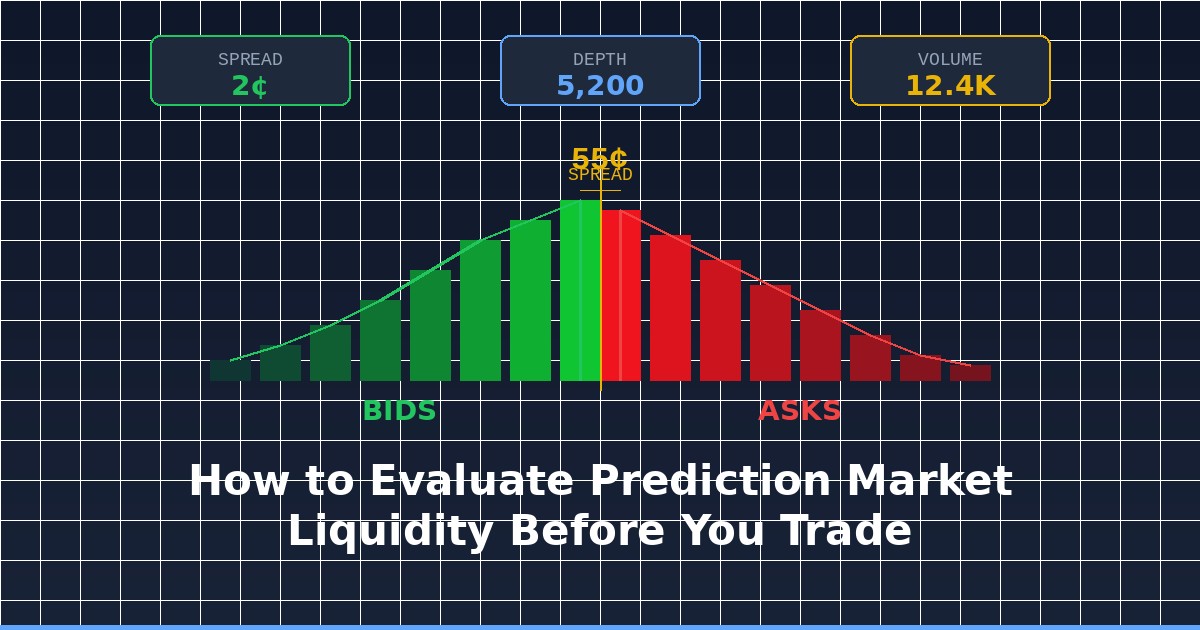
How to Evaluate Prediction Market Liquidity Before You Trade
A practical guide to checking depth, spreads, and fill quality before you commit capital. Stop getting worse prices than you expected.
9 min readRead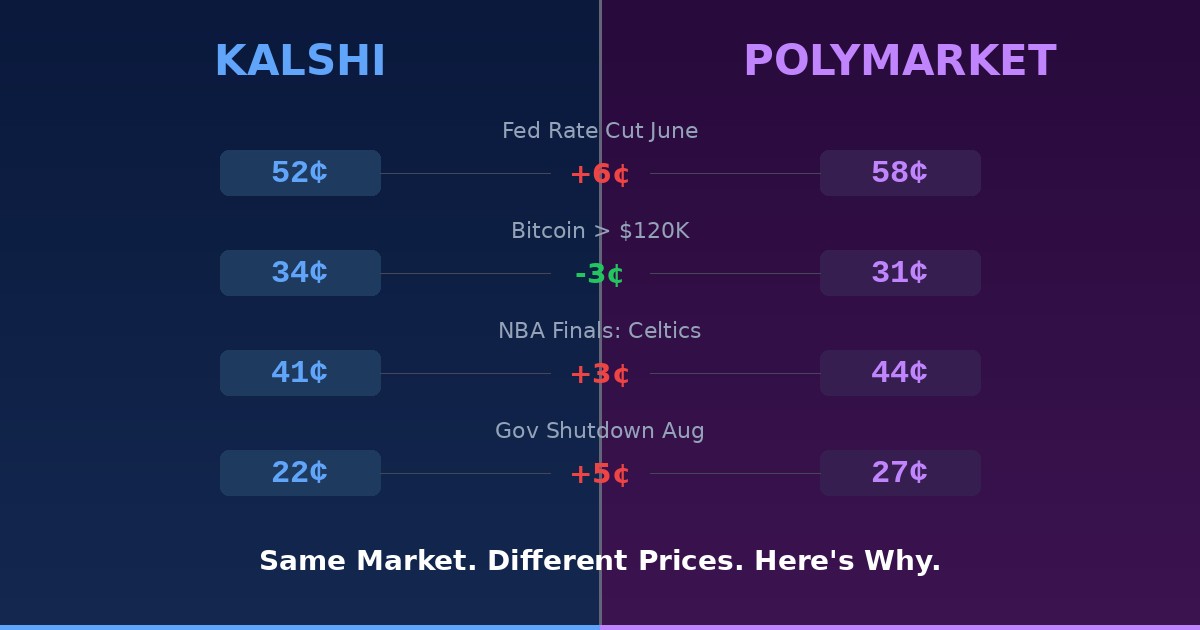
Why the Same Market Has Different Prices on Kalshi vs Polymarket
The same question can trade at 52¢ on one platform and 58¢ on another. It's not a glitch — it's liquidity, demographics, fees, and market structure. Here's what drives the gap.
7 min readRead
How to Build a Prediction Market Trading Bot: A Practical API Guide
A technical walkthrough of the APIs, SDKs, strategies, and hard-earned lessons behind building automated trading systems for prediction markets — from your first API call to a working bot.
11 min readRead