
Dahlstrom Falls to 16% in Alaska's Top-Four Governor Primary
A 20-point drop in 3 days as the Lt. Governor polls 5th in a field of 15, needing only 4th place. No scandal preceded it.
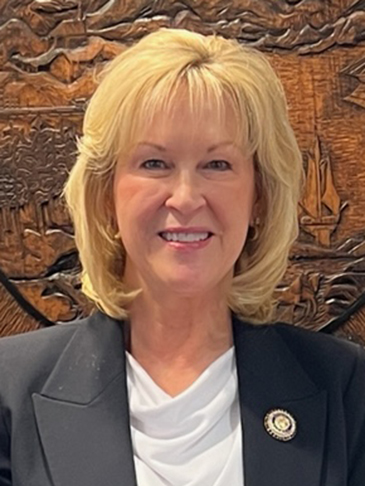
Nancy Dahlstrom Is Losing a Race Built for Her to Win
Alaska's Lieutenant Governor holds the second-highest constitutional office in the state, carries name recognition built across a decade of public service, and faces a primary format that requires nothing more than a fourth-place finish to survive. Nancy Dahlstrom should be coasting. Instead, she is drowning.
A February 2026 poll placed Dahlstrom at just 5% support among likely voters, putting her fifth in a field where finishing fifth means elimination. No scandal triggered the number. No debate gaffe preceded it. No endorsement loss accompanied it. The sitting Lt. Governor simply cannot attract enough of Alaska's electorate to clear a bar deliberately set low by the state's nonpartisan primary system.
Prediction markets have now priced this reality into her contracts. Dahlstrom's implied probability of advancing from Alaska's top-four gubernatorial primary has dropped from 36% to 16% over three days, a 20-percentage-point collapse that ranks among the sharpest moves in any 2026 state-level race. Kalshi prices her at 14%. Polymarket prices her at 17%. The consensus is clear: traders believe it is more than five times likelier that she fails to advance than that she succeeds.
The paradox is the story. The top-four format was engineered to protect candidates exactly like Dahlstrom: officeholders with institutional credentials but without a dominant electoral coalition. It was supposed to be a floor. It has become a trapdoor.
What the Market Is Saying About Dahlstrom's Alaska Governor Chances Right Now
At 16%, Dahlstrom is priced behind at least six other candidates in advancement probability. Tom Begich leads at 93%. Bernadette Wilson sits at 72%. Click Bishop, Matt Claman, and Dave Bronson all trade in the 37% to 45% range, each considered more likely than not to compete for the final advancement slots. Dahlstrom sits in a tier with Treg Taylor (23%) and above long shots like Matt Heilala (13%) and Hank Kroll (12%).
The 3-day spread between Kalshi (14%) and Polymarket (17%) is narrow enough to confirm that both platforms are converging on the same assessment. This is not a thin-market anomaly or a single whale moving price. Two independent pools of traders have independently concluded that Dahlstrom's candidacy is approaching terminal status.
A 20-percentage-point drop demands explanation. The answer is not an event. It is a structure.
How Alaska's Top-Four Primary Became a Crowding-Out Machine Against Dahlstrom
Alaska's 2022 switch to a nonpartisan blanket primary invited a specific behavioral response: more candidates file because the cost of entry drops. You no longer need to win a party nomination. You no longer need to consolidate an ideological lane before facing voters. You just need to beat all but three others on a single ballot.
The result in 2026 is a field of at least 15 named candidates, per filings tracked through Polymarket's contract list. That includes multiple Republicans (Dahlstrom, Bishop, Bronson, Taylor, Hughes, Crum), multiple Democrats (Begich, Claman, Kreiss-Tomkins), and independents. Each additional entrant on Dahlstrom's side of the ideological spectrum shaves votes from her already thin 5% polling base.
Here is the brutal arithmetic. If four candidates each hold 15% or more support, the fourth-place threshold likely sits somewhere around 10 to 12% of primary voters. Dahlstrom's 5% is not merely below the current fourth-place candidate. It is below what the fourth slot will likely require. She needs to double her support just to compete for survival, and every week that a new Republican remains in the race makes that doubling harder.
The format's design philosophy assumed that credentialed incumbents would naturally command enough residual support to clear a low bar. What it failed to anticipate is that the low bar itself signals opportunity to challengers, inflating the field until formerly safe incumbents are squeezed into irrelevance.
The Case for Dahlstrom: Why 16% Might Be Too Low
The strongest argument against the market's current pricing requires only one assumption: the field will shrink before August 18. With roughly four and a half months until the primary resolves, candidates polling in single digits will face fundraising pressure, media irrelevance, and the rational calculus of withdrawal. If three or four Republicans drop out and their supporters consolidate behind remaining options, Dahlstrom's institutional advantages, including statewide office, existing donor relationships, and her official platform as Lt. Governor, could reassert themselves.
Additionally, February polling of 600 likely voters carries a plus-or-minus 4% margin of error. Dahlstrom's true support could be as high as 9%, which would place her within striking distance of fourth. Name recognition from holding statewide office has historically translated into late-breaking support once low-information voters begin paying attention in the final weeks before a primary.
These arguments deserve weight. But they also require specific conditions that have not materialized in four months of campaigning. No major candidate has withdrawn. No consolidation has occurred. The field continues to expand, not contract.
Dahlstrom's Price Chart Shows a Slow Bleed, Not a Single Shock
The trajectory tells the structural story more clearly than any single data point. Dahlstrom traded at 75% in December 2025. She fell to 34% by mid-March. She slid to 17% by late March. She now sits at 16%, having touched a period low of 14%.
No single day accounts for the majority of the decline. No news event correlates with any inflection point. The chart is a staircase down, each step corresponding to the market absorbing new information about field dynamics rather than candidate performance. The most recent 20-percentage-point drop over three days likely reflects traders finally pricing in the absence of any positive catalyst after months of silence from the Dahlstrom campaign.
The resolution date is August 18, 2026. That leaves approximately 145 days for Dahlstrom to reverse a trend that has persisted for four months without interruption. At current trajectory, the market is projecting she reaches single-digit implied probability well before voters cast ballots. The Lt. Governor's campaign needs a structural break: a major withdrawal, a high-profile endorsement, or a dramatic polling shift. Without one, the format she helped certify as Lt. Governor will be the mechanism that ends her gubernatorial ambition.
Join our Discord for breaking news alerts, driven by real-time movements in prediction markets.
Free Trading Tools
View allCompare fees across Kalshi, Polymarket & PredictIt.
Find fair probabilities with the overround removed.
See if a trade has positive EV before you enter.
Convert American, decimal & implied probability.
Combined odds and payouts for multi-leg bets.
Your real take-home after fees and taxes.