
Dahlstrom Rebounds to 27% in Alaska Governor Primary With No News Catalyst
Kalshi prices her at 16%, Polymarket at 38%—a 22-point spread that signals thin markets, not consensus, after a five-month drop from 75%.
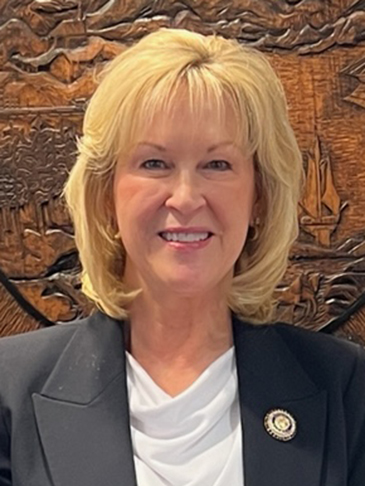
Nancy Dahlstrom's Alaska Governor Odds Jump 10 Points With No Explanation, and That's the Story
Alaska's gubernatorial prediction markets moved sharply over the past 72 hours, and no one can point to a reason. Nancy Dahlstrom, the state's sitting Lieutenant Governor, has not released a policy platform, secured a major endorsement, or appeared in any new polling. Her opponents have not stumbled. No candidate has dropped out. The news cycle around the August 18 top-four primary has been functionally silent.
Yet Dahlstrom's implied probability of advancing from Alaska's nonpartisan primary jumped from 17% to 27% in just three days, a 10-percentage-point gain that represents a roughly 59% relative increase in her assessed chances. The move is live on both Kalshi and Polymarket.
In a winner-take-all race, a 10-point swing might be background noise. In a top-four primary where four candidates advance to the general election, it reframes a candidate's entire positioning: the difference between a likely miss and a plausible contender. Here is the fact that makes the entire price history worth scrutinizing. Dahlstrom's odds collapsed from 75% in December 2025 to 17% in late March 2026 without a single scandal, withdrawal, or negative news event. The entire decline was structural. The 10-point bounce back to 27% is equally untethered to fundamentals, which raises a pointed question about whether this market is being driven by information or noise.
How Nancy Dahlstrom Fell to 17%, and Why the Alaska Governor Primary Market May Have Overreacted
The backstory matters. In December 2025, Dahlstrom held a 75% implied probability of finishing in the top four, according to prior Prediction Hunt reporting. She trailed only former state Minority Leader Tom Begich, who sat at 86%. The gap between Dahlstrom and the rest of the field was wide enough that forecasters treated her advancement as nearly settled.
Then the field filled out. Alaska's nonpartisan blanket primary, adopted in 2022, places all candidates on one ballot regardless of party. The top four advance to a ranked-choice general election. As names like Click Bishop, Dave Bronson, Bernadette Wilson, and Treg Taylor entered the conversation, bettors repriced the entire board. By February 2026, a poll placed Dahlstrom at just 5% support among likely voters, ranking her seventh in a field where only four advance. Tom Begich led at 38%, followed by Wilson at 16%, Bronson at 13%, and Bishop at 8%.
The crowding-out thesis is straightforward: when stronger names consolidate support, the remaining candidates get discounted. But prediction markets sometimes overshoot. Four slots are available, not one. A candidate polling at 5% in February with a statewide institutional profile, prior legislative service, and a stint running the Department of Corrections is not a trivial contender with four months of campaigning still ahead. The market's period low of 14% implied Dahlstrom had roughly a one-in-seven chance of clearing a bar that four candidates will clear. That pricing deserves scrutiny.
The Case Against Dahlstrom: 5% in the Polls Is 5% in the Polls
The strongest counter-argument is simple and empirical. The February 2026 survey placed Dahlstrom seventh in a top-four race. She trailed not just the frontrunners but also candidates like Matt Claman (6%) and Bishop (8%). If the poll is directionally correct, Dahlstrom needs to leapfrog at least three candidates who currently sit above her, and she needs to do it from a base of name recognition that should already be near its ceiling given her role as Lieutenant Governor.
Institutional résumés do not automatically convert to primary votes, particularly in a nonpartisan system designed to reward broad coalitions. Dahlstrom's profile skews conservative in a format that pools all partisan affiliations onto one ballot. If the Republican-leaning vote is split among Bronson, Bishop, and others while Begich consolidates moderate and left-leaning support, lane congestion works against her rather than for her.
A 27% probability still means the market believes she fails to advance roughly three times out of four. That is not a vote of confidence. It is a market saying "unlikely but not negligible," which may be the correct read on a candidate who has not moved voters in five months of quasi-candidacy.
Where Nancy Dahlstrom's Alaska Governor Primary Odds Stand Right Now
The current composite probability sits at 27%, up from a period low of 14% and a recent trough of 17%.
One detail worth flagging: the per-platform prices show a notable gap, with Kalshi pricing Dahlstrom at 16% and Polymarket at 38%. That 22-point spread between platforms is unusually wide and suggests the market has not yet converged on a consensus. In thin political markets, a small number of participants on either platform can push prices without representing broad forecaster agreement. The spread itself is a signal of uncertainty, not conviction.
The three-day chart captures the bounce, but the five-month arc tells the larger story. Dahlstrom has gone from near-certainty to the bubble to what now looks like a tentative recovery. The question is whether 27% is the beginning of a sustained re-rating or a dead-cat bounce in a market that remains structurally bearish on her candidacy.
What Would Change This Price
Three developments could move Dahlstrom's odds materially from here. First, a candidate withdrawal: if any of the four or five candidates polling between 5% and 13% drops out before August, the freed-up vote share reshuffles the board. Second, an endorsement from Governor Mike Dunleavy, whose administration Dahlstrom serves in, would signal institutional consolidation behind her candidacy. Third, a new poll showing upward movement from 5% would give the market a fundamental anchor that the current price lacks.
Without one of those catalysts, the 27% level is a market searching for equilibrium in a data vacuum. The resolution date of August 18 is still nearly four months away. In Alaska's top-four system, that is enough time for the field to thin and for a candidate with statewide office to mount a credible push. It is also enough time for the market to sell her back down if no new information arrives. The honest read: nobody knows, and the price reflects it.
Join our Discord for breaking news alerts, driven by real-time movements in prediction markets.
Free Trading Tools
View allCompare fees across Kalshi, Polymarket & PredictIt.
Find fair probabilities with the overround removed.
See if a trade has positive EV before you enter.
Convert American, decimal & implied probability.
Combined odds and payouts for multi-leg bets.
Your real take-home after fees and taxes.