
Menendez Pardon Odds Complete Round-Trip to 16% After 9-Point Spike Unwinds
A 9pp surge to 25% reversed entirely with zero news catalyst, confirming froth in a market where Trump has explicitly ruled out clemency.
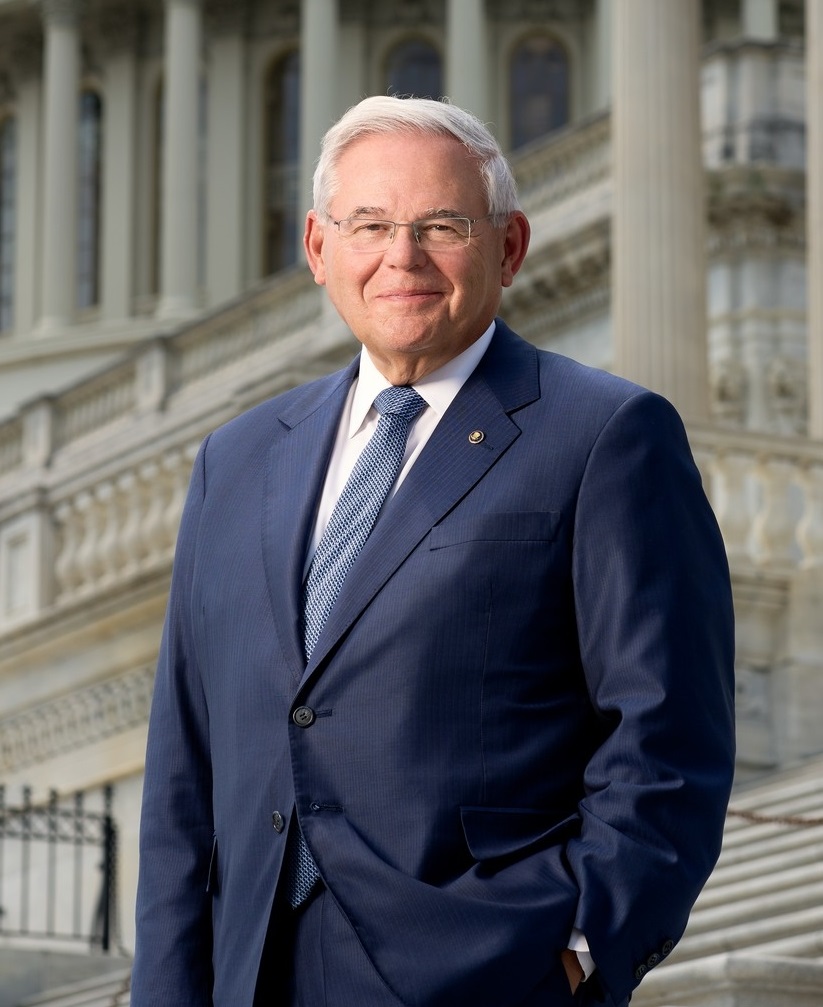
Trump Said No, So Why Did Bob Menendez Pardon Odds Hit 25%?
In January 2026, President Donald Trump told the New York Times he would not pardon Bob Menendez. He named Menendez specifically, grouping him with Sean Combs and Sam Bankman-Fried as individuals he had ruled out for clemency. That statement was on the record, unambiguous, and directed at a former senator currently serving an 11-year federal prison sentence for bribery, wire fraud, and acting as a foreign agent for Egypt.
Yet between mid-April and approximately April 19, prediction markets pricing Menendez's pardon odds surged from 16% to 25%, a 9-percentage-point move. No news catalyst accompanied the spike. No White House leak, no DOJ filing, no statement from Menendez's legal team, no congressional ally making a public appeal. The information environment was perfectly static. The move happened against an explicit presidential denial that predated, overlapped with, and outlasted the entire episode. That asymmetry between price action and public record is the puzzle this article unpacks.
What the Bob Menendez Pardon Market Looked Like Before the Noise
Before the spike, 16% was the market's settled view of Menendez's pardon chances. That number deserves scrutiny. A president has explicitly said no. Why isn't the price closer to zero?
Three structural factors explain the residual premium. First, Trump has reversed stated positions on clemency before. His pardon of former Illinois Governor Rod Blagojevich in 2020 came after years of mixed signals, and the broader pattern of Trump-era clemency decisions rewards optionality pricing. Second, presidential pardon power is constitutionally unrestricted. No court order, no legislative veto, no procedural requirement stands between a president and a signed pardon. That structural reality puts a floor under any pardon contract for any individual. Third, Menendez's conviction profile, a senior elected official convicted on corruption charges who claims the prosecution was politically motivated, matches the archetype Trump has shown willingness to consider. Menendez himself described his legal process as "political and corrupted to the core".
So 16% is not irrational. It prices a small but real tail risk that a president with broad pardon authority and a history of reversals could change his mind before December 31, 2026. What 16% does not justify is a 9-point surge to 25% on no information. The baseline was the market's rational resting state. Everything above it, absent a catalyst, was excess.
The 9-Point Round-Trip: How Fast Did the Bob Menendez Spike Reverse?
The reversal was swift and complete. From a peak of 25%, Menendez's implied probability dropped to a period low of 13% before settling at 16%, exactly where it started. The full round-trip took roughly three days in each direction. As Prediction Hunt reported on April 8, the surge to the mid-20s had no identifiable driver. By April 17, the correction was already well underway, with the contract falling to 14%.
The return to 16% is the most important data point in this sequence. It confirms the spike contained no durable information. Markets that move on genuine signal do not retrace fully. They settle at a new equilibrium that reflects the new information. A complete round-trip is the market's way of admitting the move was noise, likely driven by a thin order book absorbing a concentrated burst of speculative buying that exhausted itself once the capital behind it was fully deployed.
The period low of 13% also matters. The contract briefly overshot to the downside during the correction, dipping 3 points below the pre-spike baseline before recovering. That overshoot and bounce pattern is consistent with momentum-driven retail trading on both legs: buyers chased the spike up, then sellers overcorrected on the way down.
The Case for Taking 16% Seriously
Dismissing the residual 16% entirely would be a mistake, and here is the strongest argument for why this market could still resolve yes.
Trump's pardon record includes decisions that directly contradicted prior public statements. He pardoned Michael Flynn after the Justice Department had already moved to drop the case, creating a redundancy that signaled clemency was about political messaging, not legal necessity. He commuted Roger Stone's sentence after publicly musing about it while simultaneously denying he had made a decision. The pattern is one where stated denials function as placeholders, not commitments.
Menendez is a Democrat, but Trump has shown willingness to pardon across party lines when the narrative suits him. If Trump decided Menendez's prosecution exemplified DOJ overreach or if Menendez's cooperation on a policy matter became valuable, the January 2026 denial could evaporate overnight. Presidential statements about pardons carry no binding force. The only thing that matters is the signature.
Additionally, Menendez has eight months of remaining window. The contract resolves on December 31, 2026. A lot of political circumstances can shift between now and then. A new DOJ scandal, a midterm election calculation, or even a personal appeal from an intermediary Trump respects could reopen the conversation. The market is pricing this tail risk, and 16% for a low-probability, high-impact binary event with months of runway is defensible.
Why 16% Still Looks Rich Given the Evidence
The counterargument is real but insufficient to justify the current price. Trump did not issue a vague non-denial. He named Menendez by name in a New York Times statement, placing him in the same sentence as Combs and Bankman-Fried. That level of specificity raises the political cost of reversal. A pardon for Menendez after that statement would not just be a change of heart. It would be a contradiction of a public, named, on-record refusal, the kind of reversal that generates its own news cycle and political liability.
Menendez's conviction is also structurally different from the cases where Trump has reversed course. Flynn and Stone were convicted in connection with the Russia investigation, giving Trump a personal political motive to intervene. Menendez was convicted of taking bribes from foreign governments while serving in the Senate. There is no Trump-adjacent narrative that makes this pardon politically useful. A New Jersey state court permanently disqualified Menendez from holding public office in December 2025, further reducing the political utility of clemency.
The platform-level split reinforces the view that the blended 16% is inflated. Kalshi prices a Menendez pardon at 10%. Polymarket prices it at 22%. That 12-point gap suggests Polymarket's more retail-heavy user base is carrying the price higher, while Kalshi's audience, which skews more toward informed bettors in U.S.-regulated markets, sees materially lower odds. When two platforms disagree this sharply, the lower price often proves more accurate in low-probability political contracts.
The spike and its reversal told us something useful: this market is thinly traded enough that speculative bursts can move the price 9 points in either direction without any information changing. That same thinness likely explains why 16% persists. It is not a consensus view backed by deep liquidity. It is a resting price in a contract that most participants are ignoring, where a small number of traders betting on Trump's unpredictability are keeping the price above where the fundamental case would place it. Kalshi's 10% is closer to fair value. The blended 16% is a tax on uncertainty that the evidence does not support.
Join our Discord for breaking news alerts, driven by real-time movements in prediction markets.
Free Trading Tools
View allCompare fees across Kalshi, Polymarket & PredictIt.
Find fair probabilities with the overround removed.
See if a trade has positive EV before you enter.
Convert American, decimal & implied probability.
Combined odds and payouts for multi-leg bets.
Your real take-home after fees and taxes.