

Menendez Pardon Odds Hit 9% as Markets Finally Price Trump's January Denial
Bob Menendez, sentenced to 11 years in January 2025, saw pardon odds drop from 24% to 9% in three days despite Trump naming him as a no four months ago.
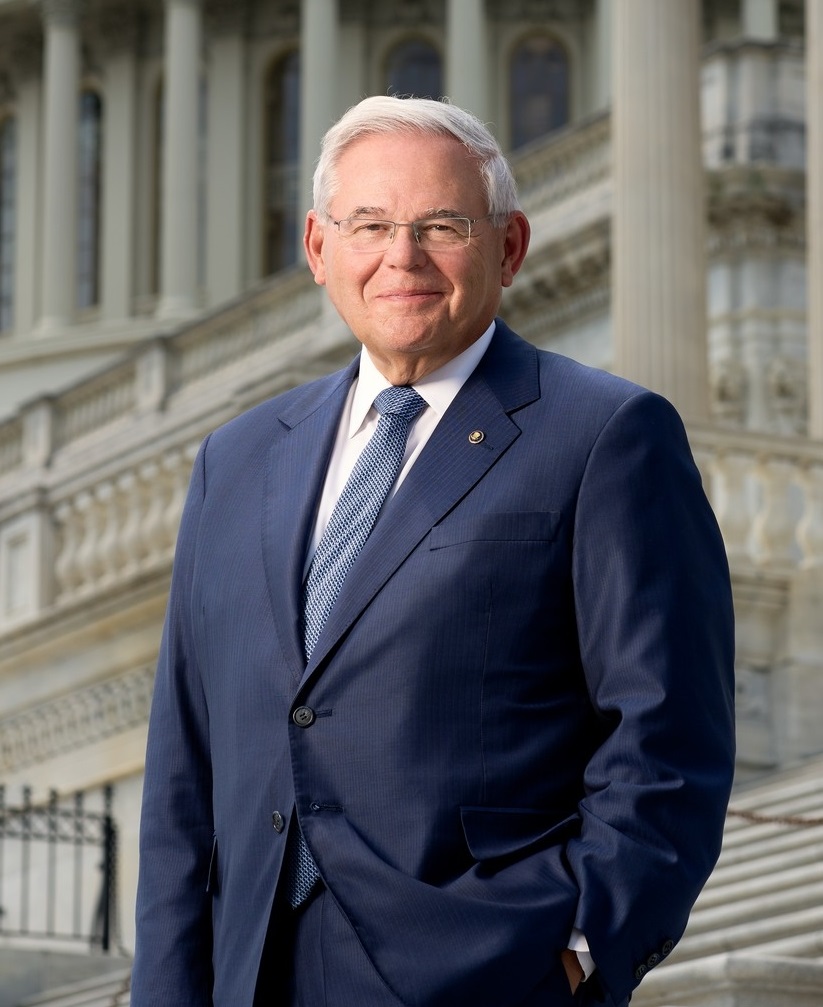
Bob Menendez Pardon Odds Collapse 15 Points, But Trump Already Told You This Was Coming
For four months, prediction markets priced a Bob Menendez pardon as if Donald Trump had never spoken on the subject. He had. In a January 2026 interview with the New York Times, the president named Menendez specifically as someone he would not pardon. The statement was widely reported at the time, unambiguous, and on the record. Yet as recently as three days ago, speculators on Kalshi and Polymarket were still holding Menendez pardon contracts at 24% implied probability.
That number is now 9%. The 15-percentage-point drop over 72 hours represents a 63% relative collapse, and it happened without a single new piece of information entering the market. No fresh denial from the White House. No legal development in Menendez's case. No shift in the political calculus around pardons. The catalyst for this week's move is four months old, making this less a story about what changed and more a case study in how long speculative hope can override stated presidential intent.
Kalshi currently prices Menendez at 8%. Polymarket sits at 10%. The 2-point spread between platforms is narrow enough to confirm that this repricing reflects consensus rather than a platform-specific liquidation event.
What Trump Actually Said About Pardoning Bob Menendez in January 2026
The January 2026 New York Times interview left no room for interpretation. Trump was asked directly about several potential pardon recipients, and he named Menendez as someone he would not pardon. This was not a dodge, a conditional statement, or a "we'll see." It was a categorical denial tied to a specific name.
The context matters. Menendez had been sentenced to 11 years in federal prison on January 29, 2025, after his conviction on bribery and corruption charges. Following sentencing, Menendez publicly appealed for Trump's intervention, framing his prosecution as part of a politicized justice system and expressing hope that Trump would "clean up the cesspool". The strategy was transparent: align his case with Trump's own grievances about prosecutorial overreach. Trump, when given the opportunity to take the bait, declined by name.
That specificity is what makes the subsequent market behavior so puzzling. Trump doesn't frequently rule out pardons with this level of directness. When he does, markets should update immediately, not four months later.
Four Months of False Hope: Menendez Pardon Odds Since January
The price history tells the story of a market that refused to listen. After Trump's January denial, Menendez odds drifted lower from their highs but never fully corrected. By early April, the market was still pricing him at 24%, a number that implied roughly one-in-four odds of an outcome the president had publicly foreclosed. By mid-April, a partial correction brought the price down to 14%, but even that was generous.
What propped up the price? Two forces. First, the structural reality that Trump has reversed himself on pardons before. His history of granting clemency to political allies and culture-war figures creates a baseline expectation that any denial is provisional. Second, thin liquidity in long-tail pardon markets means a small number of hopeful holders can keep implied probabilities elevated for extended periods. When those holders finally exit, the correction arrives in a compressed burst rather than a gradual decline.
The three-day drop from 24% to 9% has the signature shape of a capitulation trade: extended stagnation followed by a rapid unwind as the last optimists sell into diminishing bids.
The Case for Menendez at 9%, Not Zero
If this market were purely mechanical, Menendez should price closer to 2% or 3%, reflecting only the tail risk that Trump reverses an explicit public position with seven months remaining before the December 31, 2026 resolution date. The fact that 9% still holds deserves scrutiny rather than dismissal.
The strongest bull case rests on Trump's track record of reversals. He has previously denied interest in pardoning individuals only to grant clemency later when political dynamics shifted. The pardon power is unilateral: no Congressional approval, no court review. A single phone call could resolve Menendez's case overnight. Market participants pricing 9% may be accounting for a scenario in which Trump decides Menendez's cooperation or loyalty on some future political matter earns a reprieve, or in which a broader wave of late-term clemency sweeps Menendez into the mix.
There is also the possibility that intermediaries are working channels not visible to the public. Menendez spent decades building relationships across both parties in the Senate. Political favors operate on timelines that don't always produce observable signals until the pardon itself drops.
Why 9% Is Still Too High
The bull case, while intellectually honest, doesn't survive contact with the specifics. Trump didn't give a vague non-answer about Menendez. He named him and said no. Presidential reversals on pardons typically involve cases where the original position was ambiguous or unstated. Finding a precedent for Trump explicitly naming someone as un-pardonable and then reversing within the same calendar year is difficult because there isn't a clean one.
The resolution deadline compounds the problem. This market closes on December 31, 2026, giving Menendez supporters just over seven months for Trump to change his mind on a position he staked publicly. The political incentive to reverse is absent: Menendez is a Democrat with no constituency Trump needs, no base that would reward clemency, and a corruption case that doesn't fit the "political persecution" narrative Trump uses to justify other pardons.
At 9%, the market is still pricing roughly triple what the fundamentals justify. The correction from 24% was overdue. The remaining premium reflects residual liquidity friction and the inherent difficulty of pushing any prediction market contract below single digits. But the directional bet is clear: this number should continue drifting toward the low single digits as the calendar advances and no pardon materializes.
Bob Menendez is serving 11 years. The president said no, by name, in January. The market took four months to believe him. The only remaining question is whether 9% represents the floor or just a waypoint toward a more honest price.
Join our Discord for breaking news alerts, driven by real-time movements in prediction markets.
Free Trading Tools
View allCompare fees across Kalshi, Polymarket & PredictIt.
Find fair probabilities with the overround removed.
See if a trade has positive EV before you enter.
Convert American, decimal & implied probability.
Combined odds and payouts for multi-leg bets.
Your real take-home after fees and taxes.